50 years of sports-touring
Next year marks five decades since the birth of the sports-tourer. These are the landmark bikes that laid the path to long-distance lap times...
By Simon Hargreaves Photgraphy BMW, Chippy Wood, Bauer archive
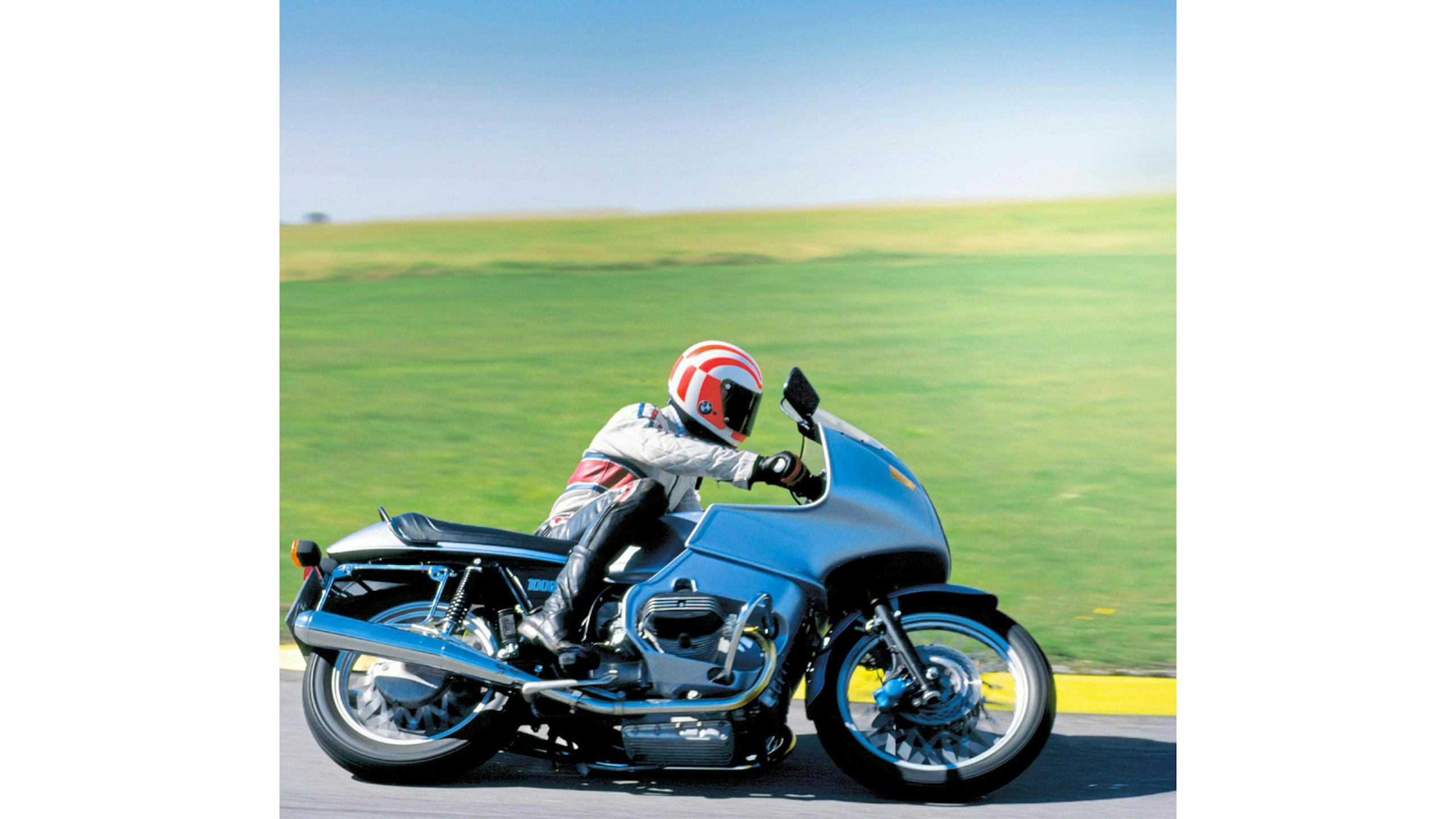
1976 BMW R100RS
Performance meets protection
» 980cc flat twin » 70bhp @ 7000rpm » 56lb·ft @ 6000rpm » 230kg » 24-litre tank
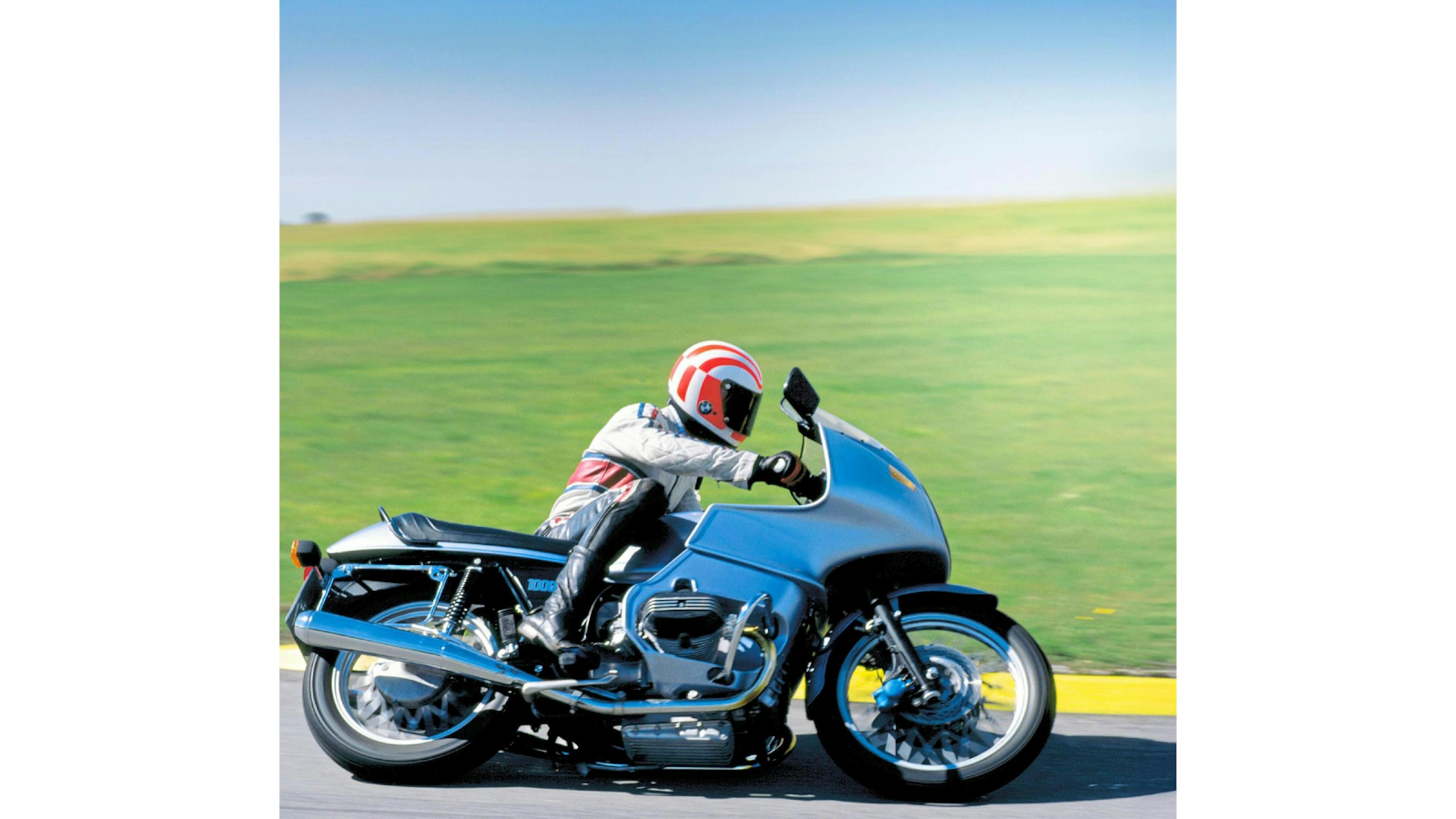
BMW’s 1976 R100RS claims two world firsts: first sports-tourer, and first fully faired production bike. We’ll give it the former, but the mid-1950s Vincent Black Prince and Ariel Leader both had large windscreens and integrated leg protectors that looked a lot like a full fairing.
However, the RS was the first production bike to benefit from wind tunnel development, ‘specifically tailored to the physical properties of the motorcycle itself’, said BMW. Unlike the Vincent’s and Ariel’s plastics, the RS’s fairing wasn’t a barn door to beat wind into submission but shaped to cut through it and enhance high-speed stability.
It was an evolution of 1973’s handlebar-mounted, bikini-faired R90S – the first BMW styled by an actual designer, Hans Muth, not by post-engineering consequence. Muth then set about sculpting a fairing for the RS, which stands for Reise Sport (‘Travel Sports’).
If the idea of combining sportsbike requirements (high-performance engine, agile chassis, compact riding position) with a tourer’s (ride quality, luggage and pillion capacity, relaxed ergonomics) seem contrary now, imagine the confusion in 1976. With no category to put the RS into context, BMW simply called it ‘the best superbike in the world’ in adverts – and with the 980cc boxer making 70bhp, it sort of was back then. Didn’t win any races, which the R90S notably did at the TT and Daytona, but the R100RS was well up for comfortable high-speed distance.
I should know. In December 2006 I rode an RS the 847 miles from John o’ Groats to Land’s End in 12 and a half hours through the worst storms in half a century (70.6mph average). Completely enclosed by a fairing that, by today’s standards, absolutely was a barn door – it even enveloped my hands – the RS proved, 30 years on, it was still able to handle big miles at speed.
1986 Honda VFR750F-G
Race-ready and reliable
» 748cc 90° V4 » 105bhp @ 10,500rpm » 56lb·ft @ 9000rpm » 221kg » 20-litre tank
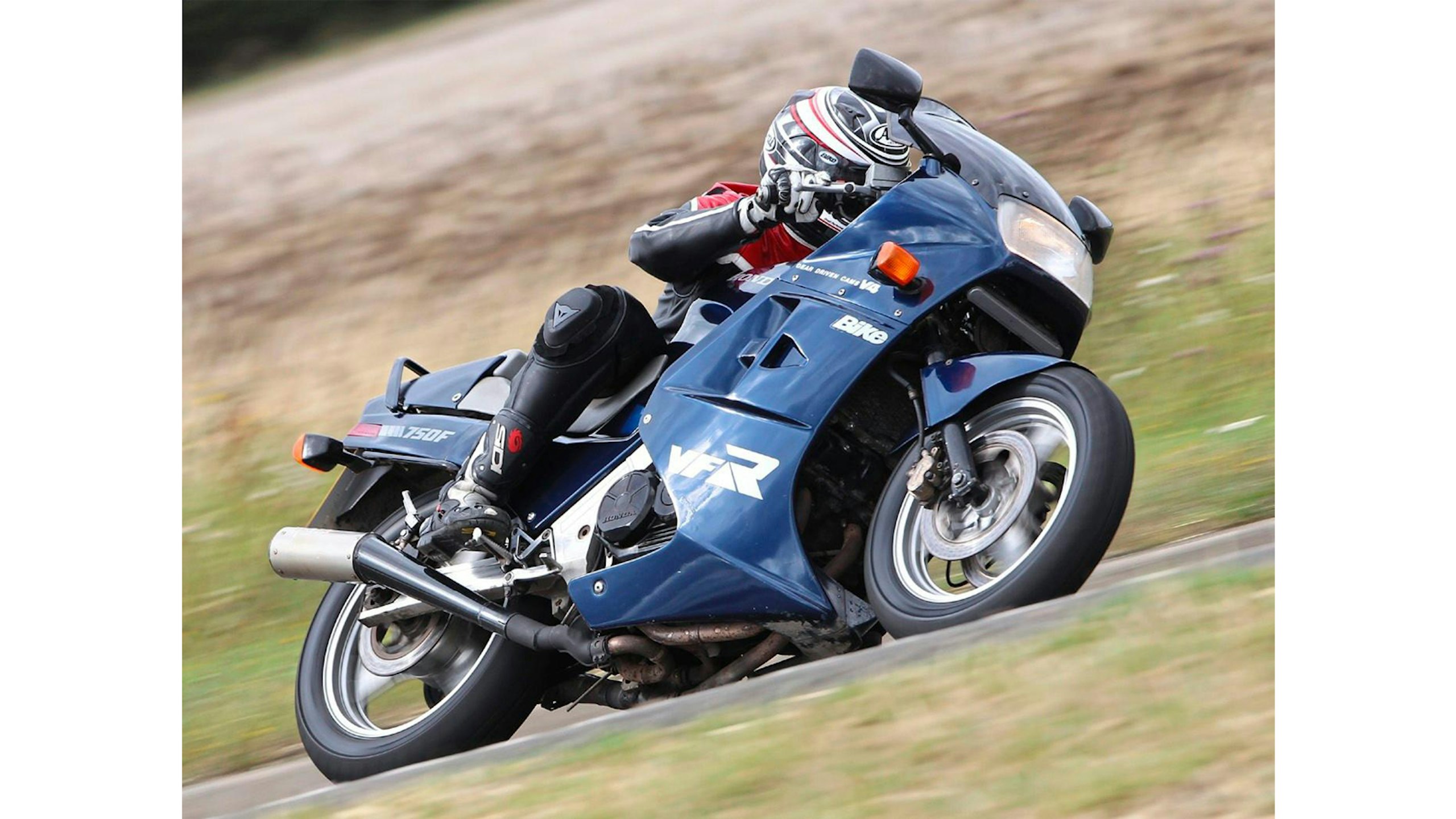
Following years of notorious mechanical and build quality issues with their original VF750 range in the early ’80s, Honda spared no expense constructing the next-generation VFR in 1986. Designed to restore the company’s reputation, the over-engineered VFR was rumoured to be a loss-leader and cost more to build than could be recouped through sales (nevertheless, a new 1986 VFR750 was a few hundred quid cheaper than its Yamaha FZ750 and Suzuki GSX-R750 rivals).
Central to the V4 motor were its gear-driven cams; expensive to produce and assemble, but guaranteeing consistent cam performance (dodgy cams were the heart of the previous V4’s reliability problems, but it wasn’t the timing so much as the production method).
Claimed power was boosted from the old VF750’s uncompetitive 84bhp to 105bhp, and an aluminium frame (still a novelty in 1986) added to the spec. But surprisingly, it wasn’t a full-on sportsbike; outgunned by more dedicated race-rep 750s, the softer, comfier, less-track-focused VFR was more of an all-rounder.
None of which stopped a desperate Ron Haslam, then a Honda Grand Prix rider, who rolled one out of a showroom when his race bike blew up, took the indicators off, and raced it the 1986 Transatlantic meeting at Donington Park. Up against race-prepped superbikes ridden by the likes of Kevin Schwantz, Rob McElnea and Keith Huewen, it rained – and Rocket Ron put the bog-stock VFR on the podium in two races, sealing the VFR’s reputation as reliable and fast.
Two years later Honda created the RC30 – different engine and chassis – to rule the racetrack, but the road-going VFR750 went on to rule the sports-touring world. And it could still race at the end of its reign – 11 years later, in 1997, in its final year of production, I took a stock VFR750 to eighth place in an eight-hour endurance race at Snetterton. Not exactly Ron’s feat, but not bad for an old sporty tourer.
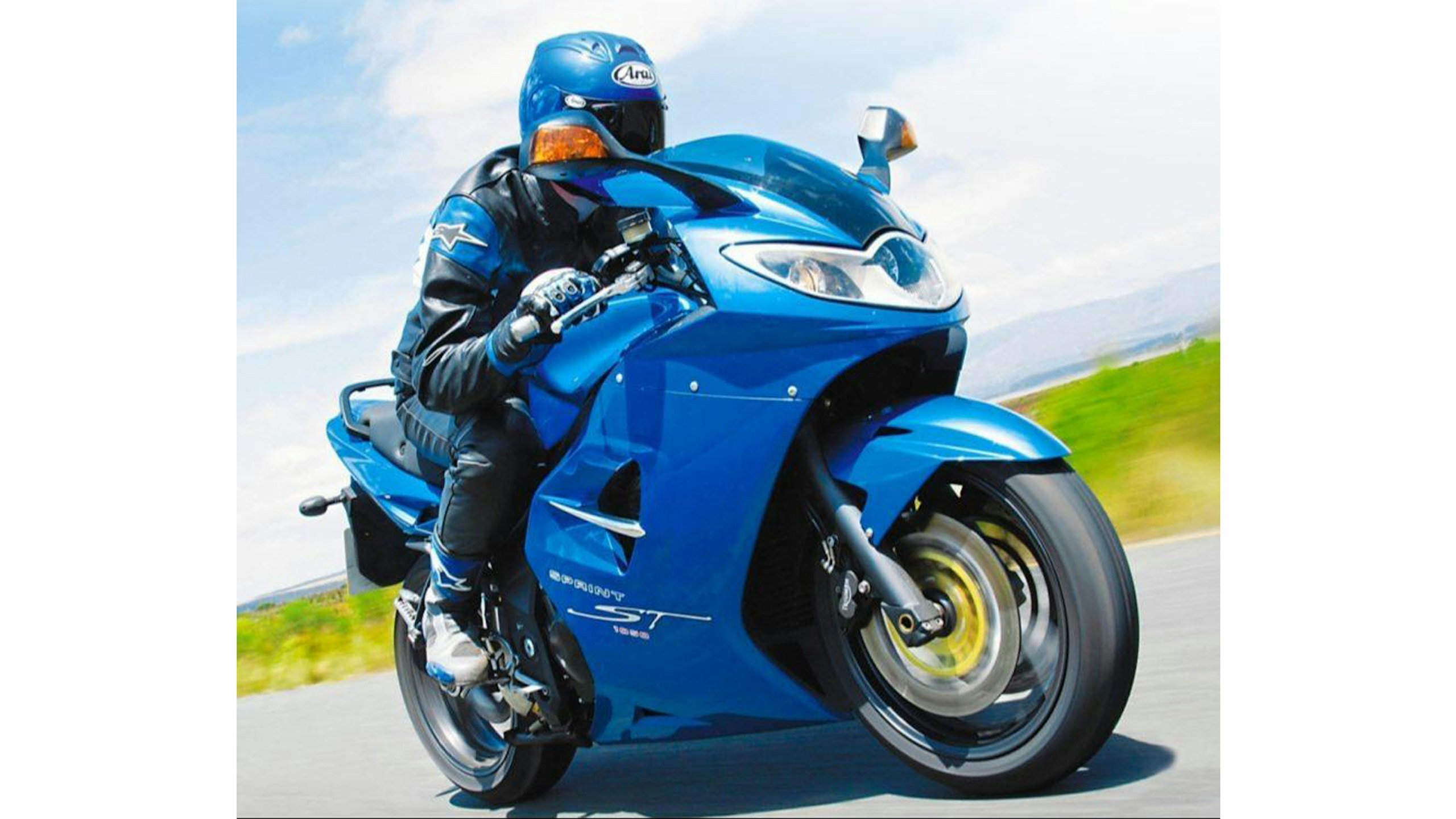
2005 Triumph Sprint ST 1050
Bigger, better and British
» 1050cc inline triple » 123bhp @ 9250rpm » 77lb·ft @ 5000rpm » 225kg » 21-litre tank
Triumph’s 2005 Sprint ST 1050 – ‘Sports Tourer’, a tongue-in-cheek nod to BMW’s RS initialism – was neither their first Sprint nor their first sports-tourer.
The half-faired 1993 Sprint 900 was one of Hinckley’s original models, revamped into 1999’s fully faired, frumpily styled 955cc Sprint ST. That ST was a solid performer, but lacked either sportsbike zing or touring practicality; at least one of them being a fundamental requirement of a sports-tourer.
Enter the Sprint ST 1050 in 2005; a brand new, compact inline triple motor making a proper 123bhp housed in an aluminium beam frame with a still (just) de rigueur single-sided swingarm. Three underseat exhaust cans at the rear of the bike echoed the fairing’s triple headlight arrangement and three circular dash dials at the front, and served to cement Triumph’s commitment to three cylinders as their signature engine configuration, following years flirting with the odd inline four. And although the base ST came without panniers, hard cases and top box were a factory option from the start – and by 2007 they were fitted as standard; a sports-touring first.
The Sprint ST 1050 was a definitive sports-touring statement of intent and revitalised a stagnating category. Churning, midrange-rich power delivery, modern styling, a sporty handling dynamic and all-day ergonomics – and a Union Jack badge, if it mattered. More powerful, gruntier, lighter and £700 cheaper than a VFR800, there was no reason to buy anything else if you wanted power, agility and panniers.
For almost 20 years Honda’s VFR had set the sports-touring reference. But no longer. In 2005 the Sprint ST outsold the VFR800 (by then in its fourth year with VTEC variable valve timing) by two-to-one.
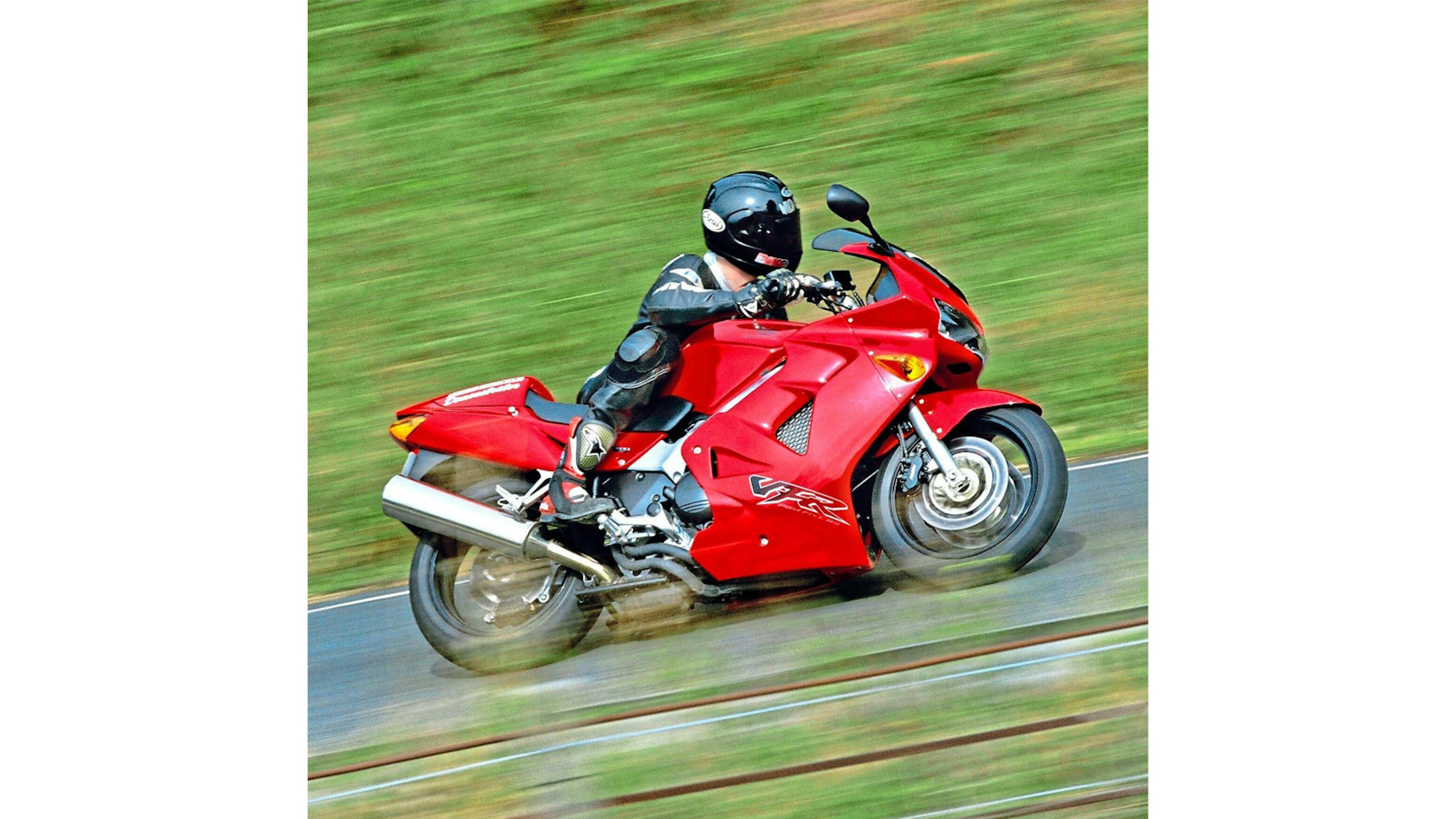
1998 Honda VFR800
Spawn of a superbike
» 782cc 90° V4 » 108bhp @ 10,500rpm » 61lb·ft @ 8500rpm » 224kg » 21-litre tank
By 1997 Honda’s VFR750 was still the world’s default sports-tourer, but the class was stretching the interpretation of the category: Kawasaki’s ZZR1100 and Honda’s own Blackbird were much, much faster than the VFR, frequently seen hammering Europe’s motorways loaded with panniers and top box.
Meanwhile, the 600cc sportsbike class had produced passable sports-tourers in Kawasaki’s ZZR600 and Yamaha’s Thundercat – not to mention Honda’s own CBR600, still winning races on track and getting loaded with luggage on the road.
BMW’s offering, the R1100RS (p106) with its 90bhp flat twin and weird Telelever front end, might have been a groundbreaker but it was still a niche choice, while most of Triumph’s options were still based around the original 885cc Hinckley triple.
‘The Sprint ST 1050 was a definitive sportstouring statement of intent’
Honda had eked about as much as they could from the VFR750, having switched to a single-sided swingarm and given it Ferrari Testarossa-style fairing slats to sex it up.
The 1998 VFR800 upgrade lengthened stroke to pep up midrange engine performance, switched central cam gear drive to the side of the engine (copying the RC45 race bike’s design, from which the VFR’s motor drew inspiration), moved to fuel injection to help meet a new emissions target called Euro1 (never catch on), and used a new frame design that pivoted the (still single-sided) swingarm directly from the back of the VFR’s crankcases, with twin sidemounted radiators because there was no room to put them behind the front wheel.
The result was a significant dynamic improvement over the 750 – more performance, refined handling, a bit more weight and slightly portly styling edged the VFR800 – and sports-touring – towards middle age.
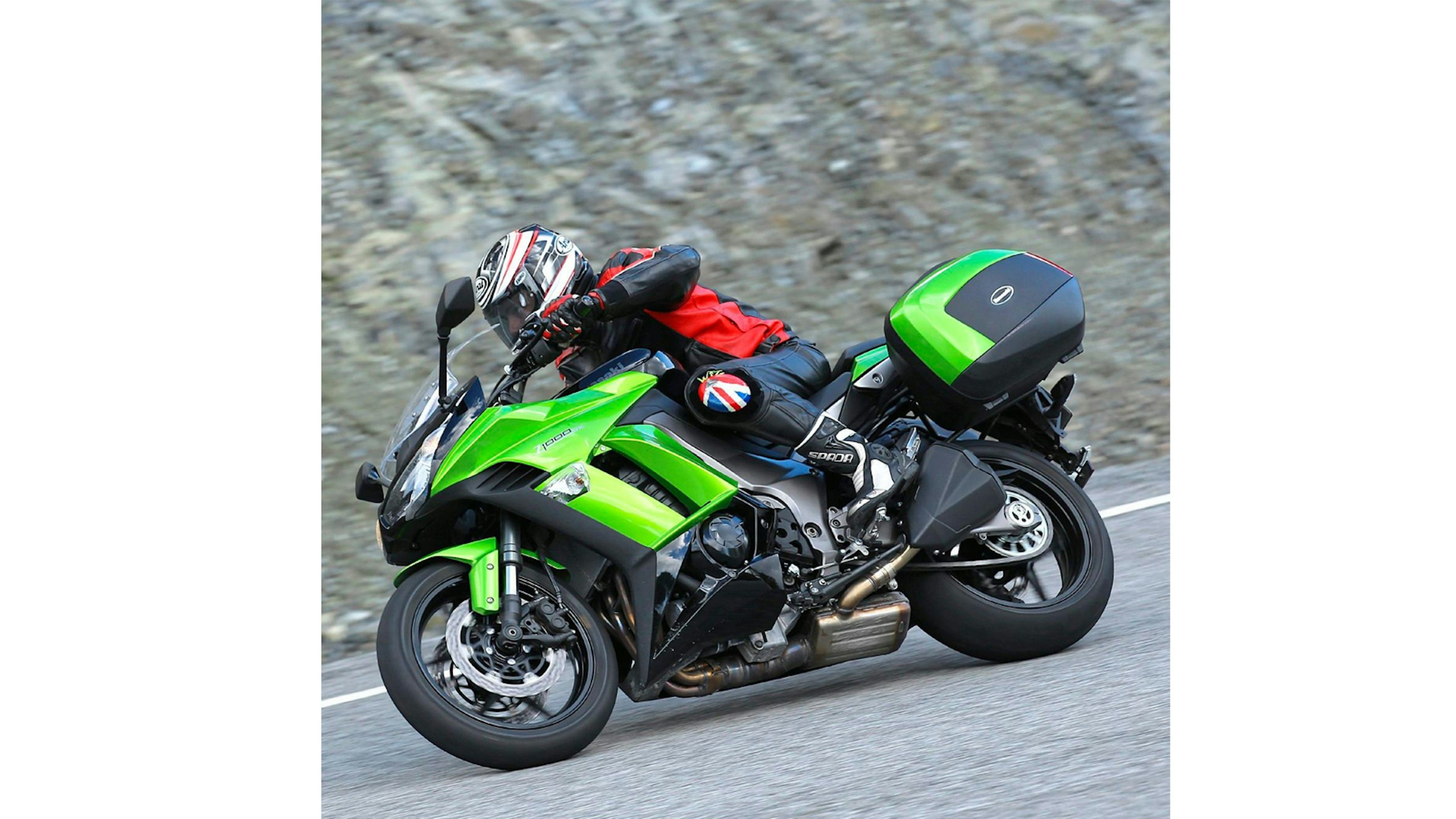
2011 Kawasaki Z1000SX
Back to basics
» 1043cc inline four » 136bhp @ 9600rpm » 81lb·ft @ 7800rpm » 228kg » 19-litre tank
By the end of the millennium’s first decade, the sportstourer class had gone from stagnant to moribund. Adventure bikes were in the ascendency, distorting the market and stealing sales of everything from tourers to sportsbikes.
And sports-tourers themselves felt redundant. Triumph’s Sprint GT replaced the Sprint ST in 2010 but wasn’t an upgrade; by now it looked dated and Triumph had lengthened its wheelbase with a longer swingarm, which wrecked handling – the GT steered so badly the front tyre wore out before the rear.
Honda’s VFR800 was in stasis, largely unchanged since 2002’s VTEC revamp, and the 2010 VFR1200 failed to stimulate demand despite an outstanding V4 motor thanks to incoherent styling and high price tag.
BMW didn’t have an RS in their line-up. The R1150RS was discontinued in 2005 to be replaced by the R1200ST – a bike so ugly even BMW couldn’t bear to make it. It was discontinued in 2007.
Into this vacuum stepped Kawasaki’s 2011 Z1000SX – a fully faired Z1000 with a comfy, lightly sportified riding position (clip-ons comprehensively above the top yoke), adjustable screen, digital dash, smooth motor, the option for panniers, and a price tag that undercut bikes like the VFR1200 by nearly two grand.
Turns out it was the sports-tourer people wanted all along. It was a hit – one in three Kawasakis sold over the next few years was a Z1000SX. But it didn’t stand still – every few years it got a bit better: panniers were integrated instead of on racks, suspension got better with every iteration, fairing and screen were tweaked, electronics appeared. And with this year’s Ninja 1100SX evolution – with a larger, less powerful but much more useful engine – it feels as if the SX success story is set to continue for a few more years to come.
2025 BMW R1300RS
» 1300cc flat twin » 143bhp @ 7750rpm » 110lb·ft @ 6500rpm » 245kg » 17-litre tank
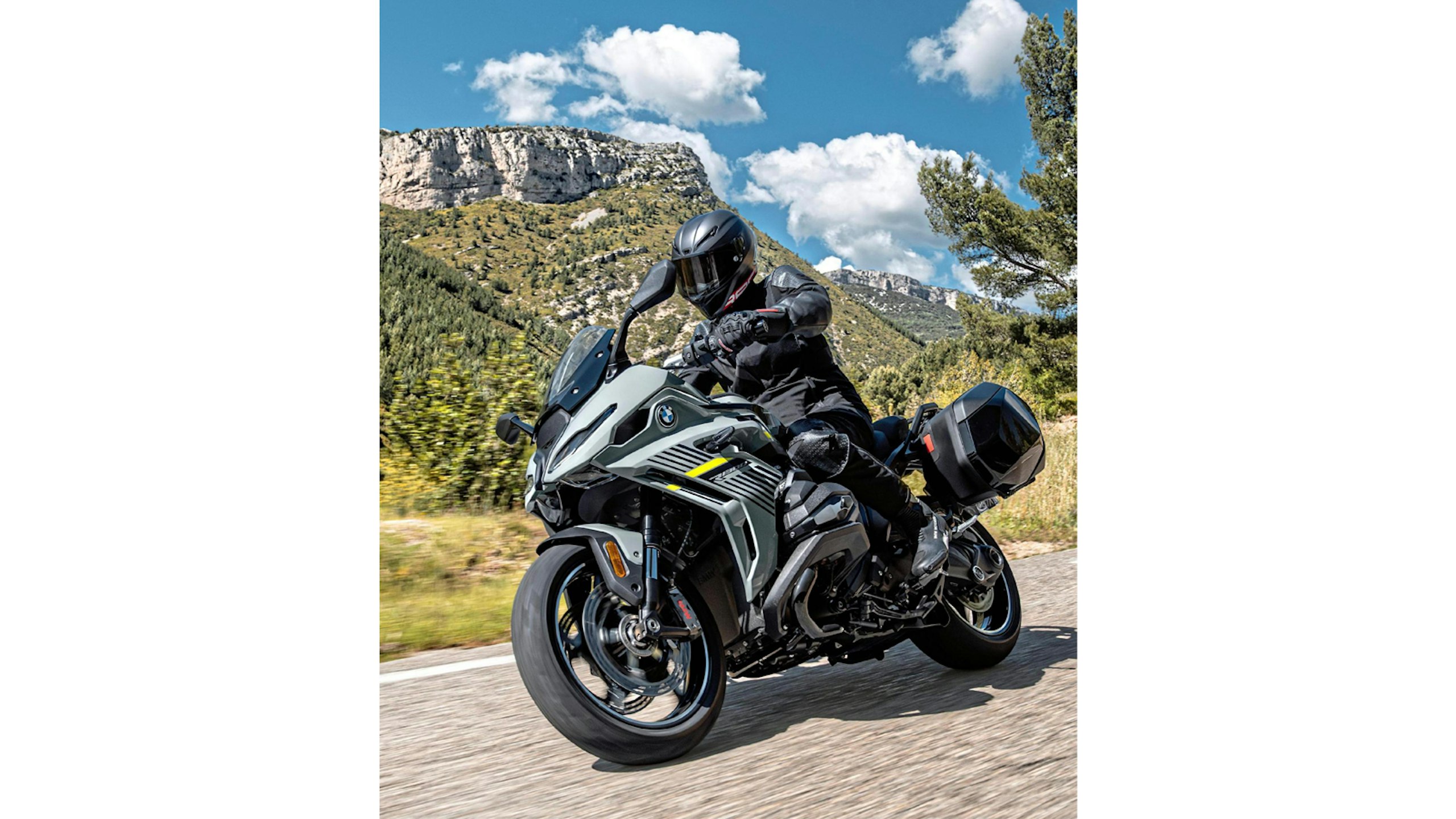
So, does BMW’s R1300RS move the game on?
Nearly 50 years after its forefather created the class, does BMW’s latest sports-touring boxer deserve a place among the greats?
The dichotomy facing BMW’s R1300RS development team was the same facing the R100RS team 50 years ago: make the RS more sporty or more tourer-y?
Thankfully, we don’t have to interpret BMW’s 2025 decision because they state it themselves, saying the R1300RS ‘offers an even sportier riding experience than its predecessor’. Pretty unequivocal, except they then say ‘it remains the perfect companion for comfortable touring and long-distance travel’ – for which there’s not much evidence.
Riding position is more compact than the R1250RS with lower clip-ons and more rearset footpegs, but the 1300 doesn’t get a bigger tank (it’s actually smaller), or a more effective fairing, or a taller screen. But it does get more tech, a bigger engine, uprated suspension and neater transmission.
So, let’s unpack what the R1300RS does better than the 1250, what it does the same, what’s worse, and in which direction it’s moved the sports-touring game.
Like the rest of the R series, the RS has a new engine and chassis: pistons, rods, crank, valvetrain, gearbox (relocated under the engine), clutch, crankcases, cylinder heads; new steel beam frame and aluminium subframe, uprated suspension (with world’s first two-stage variable fork spring rate), revised steering geometry, lighter wheels, new styling, sportier riding position, wider rear tyre and a slew of new electronics including radar-assisted cruise control and collision avoidance system. Basically, the entire bike.
It’s still a flat twin, but capacity is upped with wider bores and shorter stroke (said every new sportsbike engine, ever), making the motor more oversquare and increasing its capacity to rev. And top end is where the 1300 squeezes more juice than the 1250 – above 6000rpm (when peak power is at 7750rpm, that’s the top end!). Compared to the 1250, the 1300 motor is fresher, livelier, smoother, quicker to rev – and the extra top end is noticeable without trade-off in midrange or bottom end. It’s lost the old motor’s lumpy, long-throw throbby-ness – a characteristic in gentle decline with every new flat twin since the R100RS.
‘The R1300RS flies like no 1976 flat twin could imagine’
But for outright performance, the 1300 flies like no 1976 flat twin could imagine. It doesn’t gather speed so much as have it bundled up on tap; just twist the grip for instant access to very fast indeed. And it cruises better too – 70mph in top is a lazy 3600rpm.
The new transmission is a huge leap. Rather, there’s no huge leap across neutral from first to second. Quickshifted gears slide home precisely – and BMW’s ASA semi-auto system is the best of the lot. It’ll go full auto, or you can use the foot lever. The motor can’t stall – at low speed it’s like a big twist ’n’ go scooter.
Roadholding, ride quality, cornering control and braking are all as classy as the 1250 – the 1300 still glides over bumps with disdain. Not so sure about its steering, though. The old RS was never the most nimble; the new RS is also ponderous at the front and needs appreciable bar pressure to turn. The 1300 has more trail, and a 190 rear tyre instead of a 180, so maybe that explains its reluctance to turn.
Or maybe it just needs wider, upright handlebars instead of clip-ons, like the R. That’d improve the riding position, which is even more canted forward than the 1250 – it places weight on wrists and crunches knee angle, but the low seat still means you put a lot of weight through your derrière.
It even looks odd: while out riding the new RS, a passer-by asked if it was the low seat version. And when I saw someone else riding it, from the front it looked like a maxi-scoot, which isn’t a good look.
Et voilà, we’re back to the dichotomy. It’s subjective, but much as I love the R1250RS, a more relaxed riding position, bigger screen and larger tank would suit the R1300RS better – which, BMW would argue, describes the R1300RT; now so compact it’s more like a sports-tourer, too. And it goes to show that moving the game on very much depends in which direction your customers want the game to go.