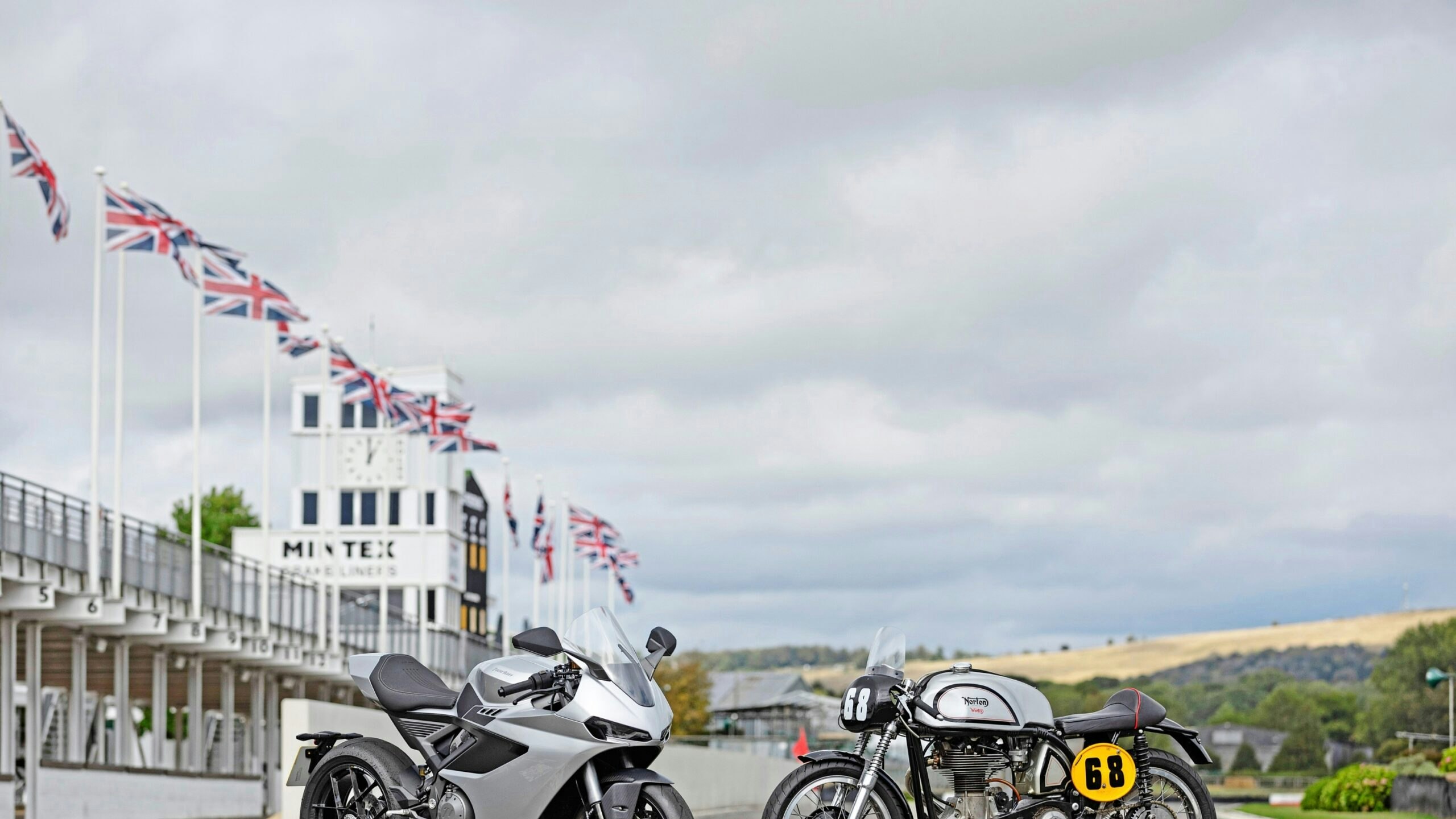
As I gaze dreamily on the two Nortons in the Goodwood Circuit pit lane, both machines look full of intent. One is an air-cooled single from 1953; the other a 72° V4 from 2026 – but they sit equally sweetly on their wheels, connected by a gorgeous silver finish. So too the Norton logo, which may have evolved but is essentially the same, on both tanks. And despite being separated by more than 70 years, the two bikes were built just 10 miles apart.
But come on. No matter how hard I try to see a direct development timeline from the old Manx to the new, or romantically frame the 206bhp superbike as heir apparent to the 50bhp classic, I can’t make it stick.
With its 499cc single, Featherbed frame and focused form, the original Manx is the post-war pinnacle of British motorcycle engineering and racing success. And while the new 1200cc V4 Manx R might share several traditional Norton values, like exclusivity and performance, it’s still a state-of-the-art, high-tech superbike, its development paid for by Indian manufacturing monolith TVS Motor Company.
They don’t really have anything in common. Do they?
Blast from the past
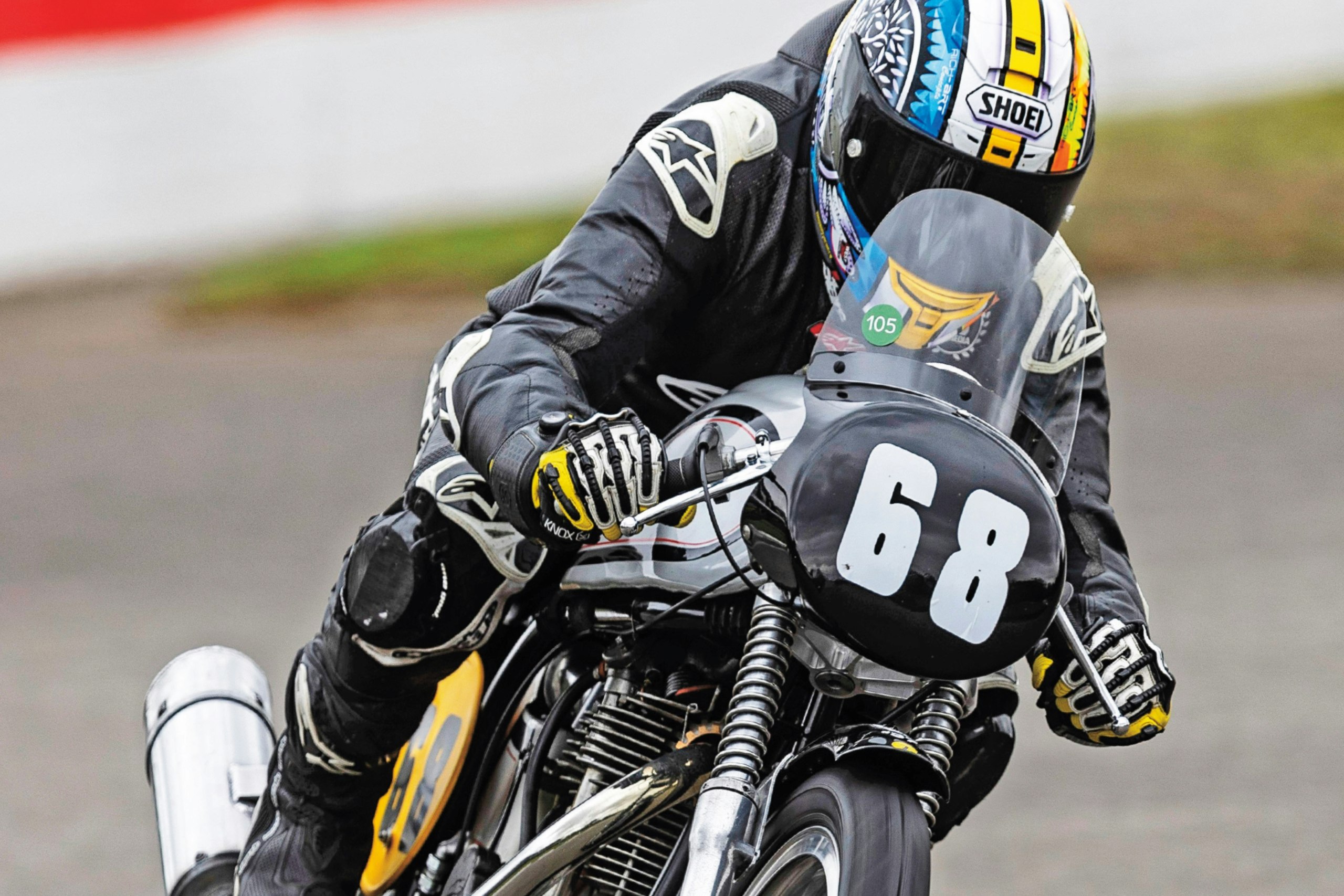
This classic Manx has been developed by Russell Racing for competition at the Goodwood Revival, but it is an exact replica of Norton’s 1953 factory racer. That means a trolley start and a thorough warm-up procedure. There’s a right-foot, race-pattern gearbox, with the rear brake under my left boot. As far as rider aids go, there’s a throttle grip you can open or close.
Climbing aboard is a sobering experience. A long metal fuel tank complete with leather retaining strap digs into my inner thighs. The seat is wafer-thin, like I’m sitting directly on the frame rails, and even in the pit lane I can feel the heat radiating from the engine. The rider, it seems, has barely been considered, and the single’s infamous primary vibrations are making themselves known.
I enter the circuit, glance over my left shoulder and accelerate gently through first gear. Clutch in, press down for second, clutch out, back on the throttle. Then repeat the process for third. Every action is deliberate and methodical. There are no rev limiters or warning lights; you ride with deep mechanical sympathy, just as racers did back in the day.
Goodwood is fast and flowing, and a clean lap is all about keeping the throttle cable tight, staying tucked in and carrying as much corner speed and momentum as possible. The bike’s tiny proportions encourage you to adopt that classic Geoff Duke riding position: chin on the tank, elbows in, make yourself as tiny as possible.
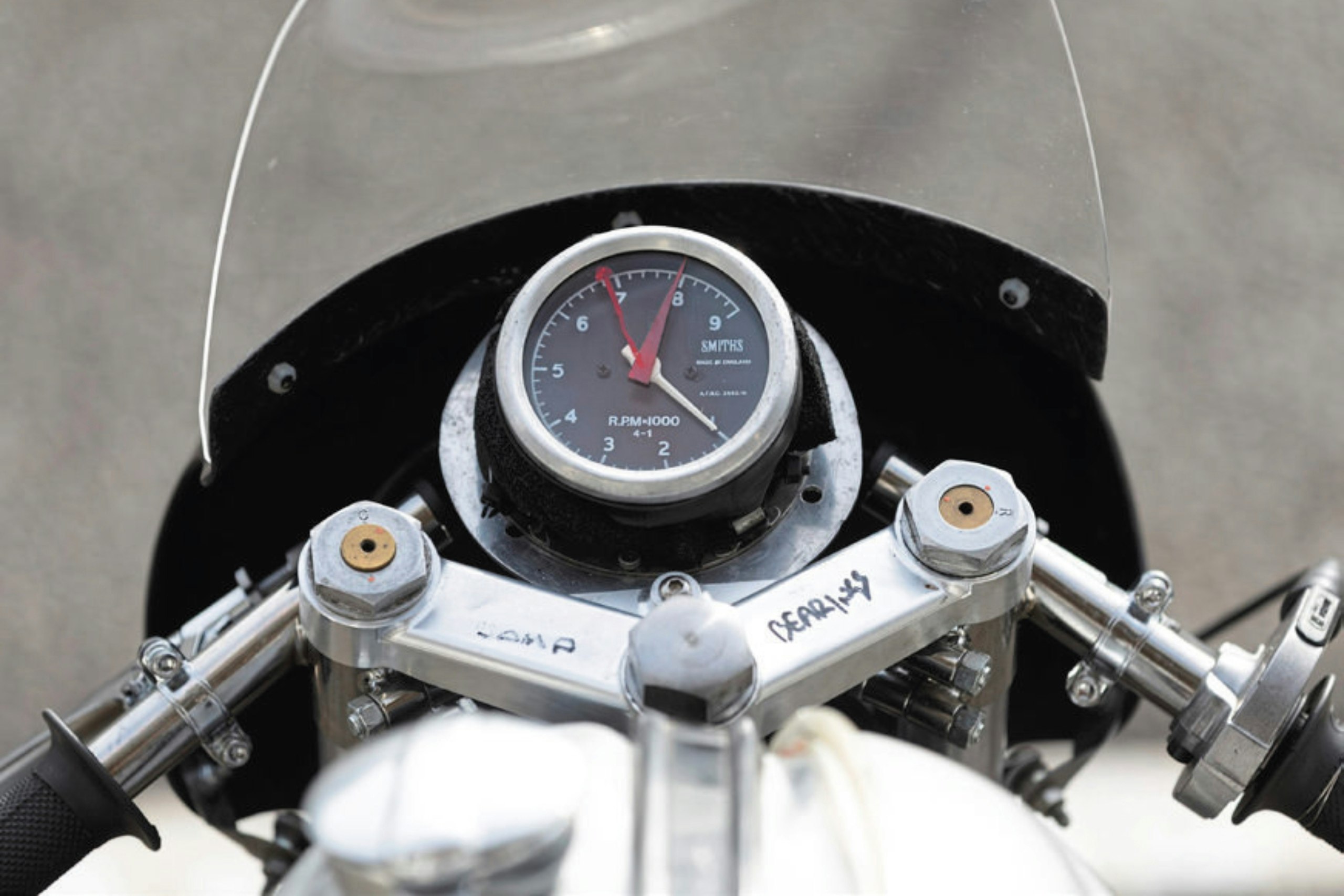
Down the back straight, those vibrations become unbearable by modern standards, while the rev counter needle bounces around without a clue. The speed itself isn’t exactly overwhelming, but the experience is as visceral as it is physical. As the engine approaches its 6500rpm redline and my fillings head for the exit, I feel directly connected to every spring and bearing in the engine.
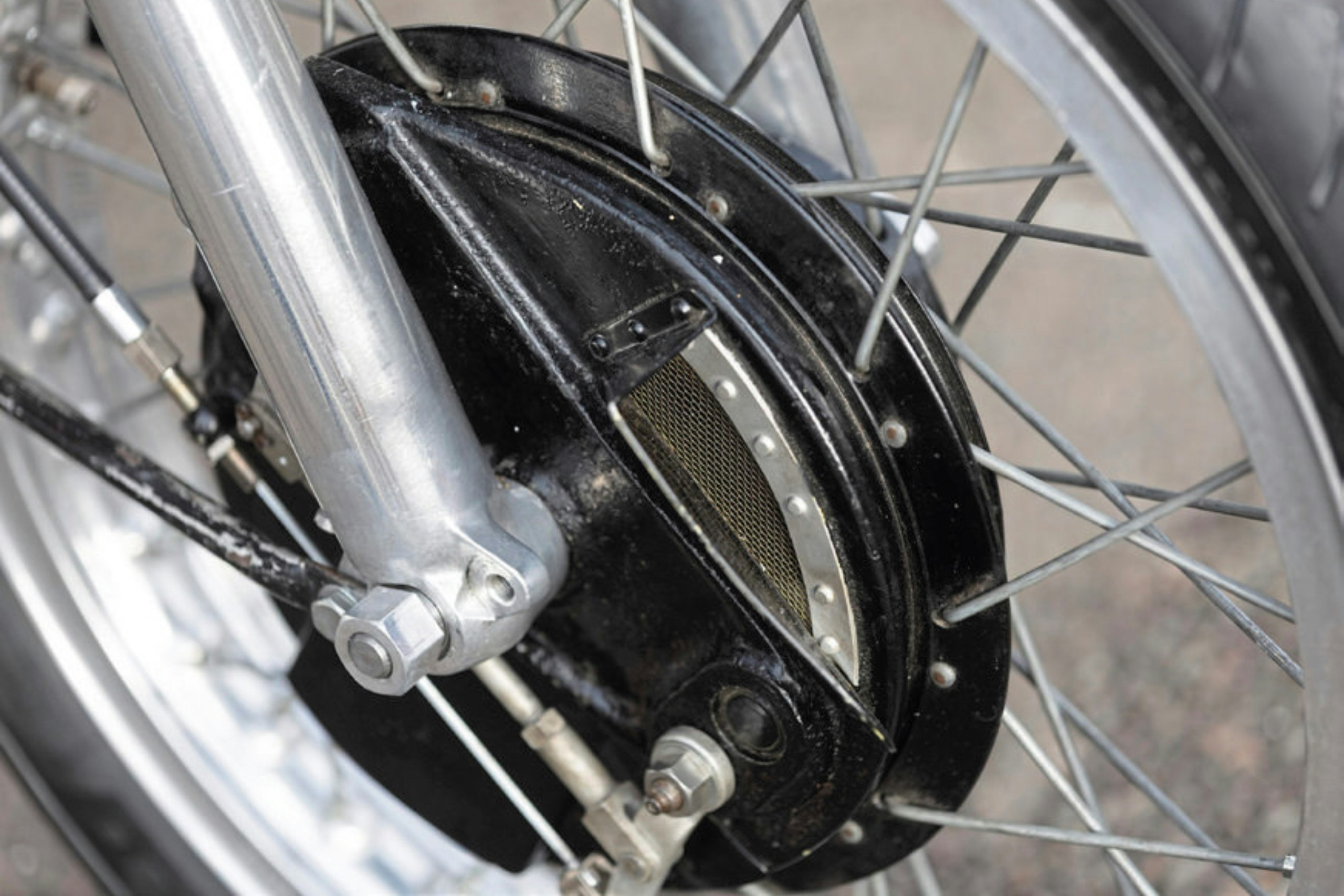
At 130kg it’s a featherweight in the paddock, but heavy 19in laced wheels create considerable unsprung and rotational mass, making the bike harder to wrestle into turns than you might expect. Twin leading-shoe drum brakes are reasonably strong for the first couple of laps, but soon begin to overheat as the lever gradually comes closer to the handlebar.
Along the main straight I remember to glance down to ensure the oil spraying onto my boot isn’t finding its way to the rear tyre. We’re approaching 115mph in top gear before braking heavily and shifting back through several ratios for two right-handers. Clutch in, blip the throttle, select the gear, release the clutch – then back on the gas for another lap of unfiltered joy.
Four times the power
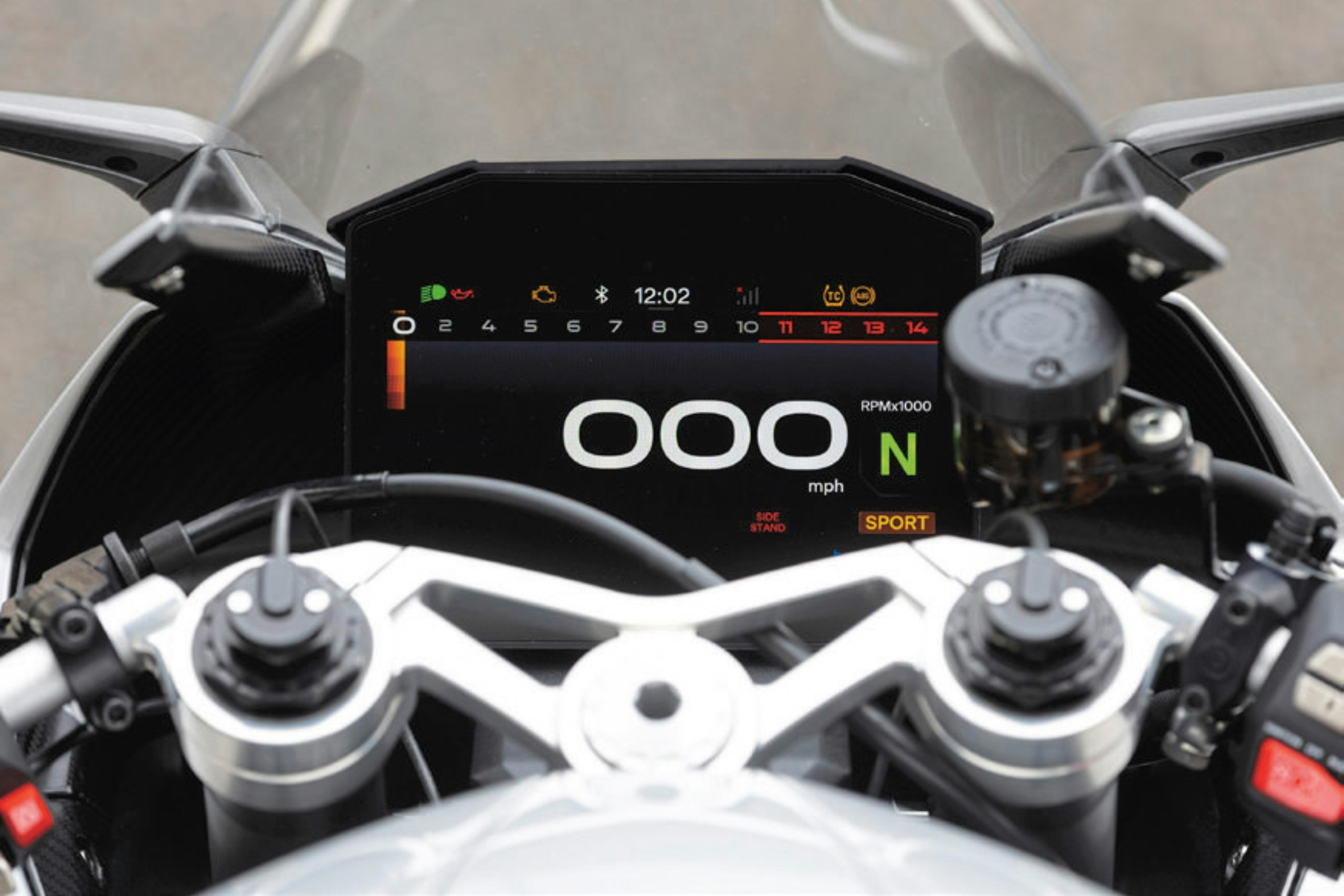
Skipping seven decades of development in seconds, I swap from Manx Norton to Norton Manx R. My pre-ride set-up now consists of peering at a vast touchscreen TFT, adjusting semi-active suspension settings, and optimising engine mapping and rider aids to the circuit and conditions. On the air-cooled Manx single, it’s a plug chop.
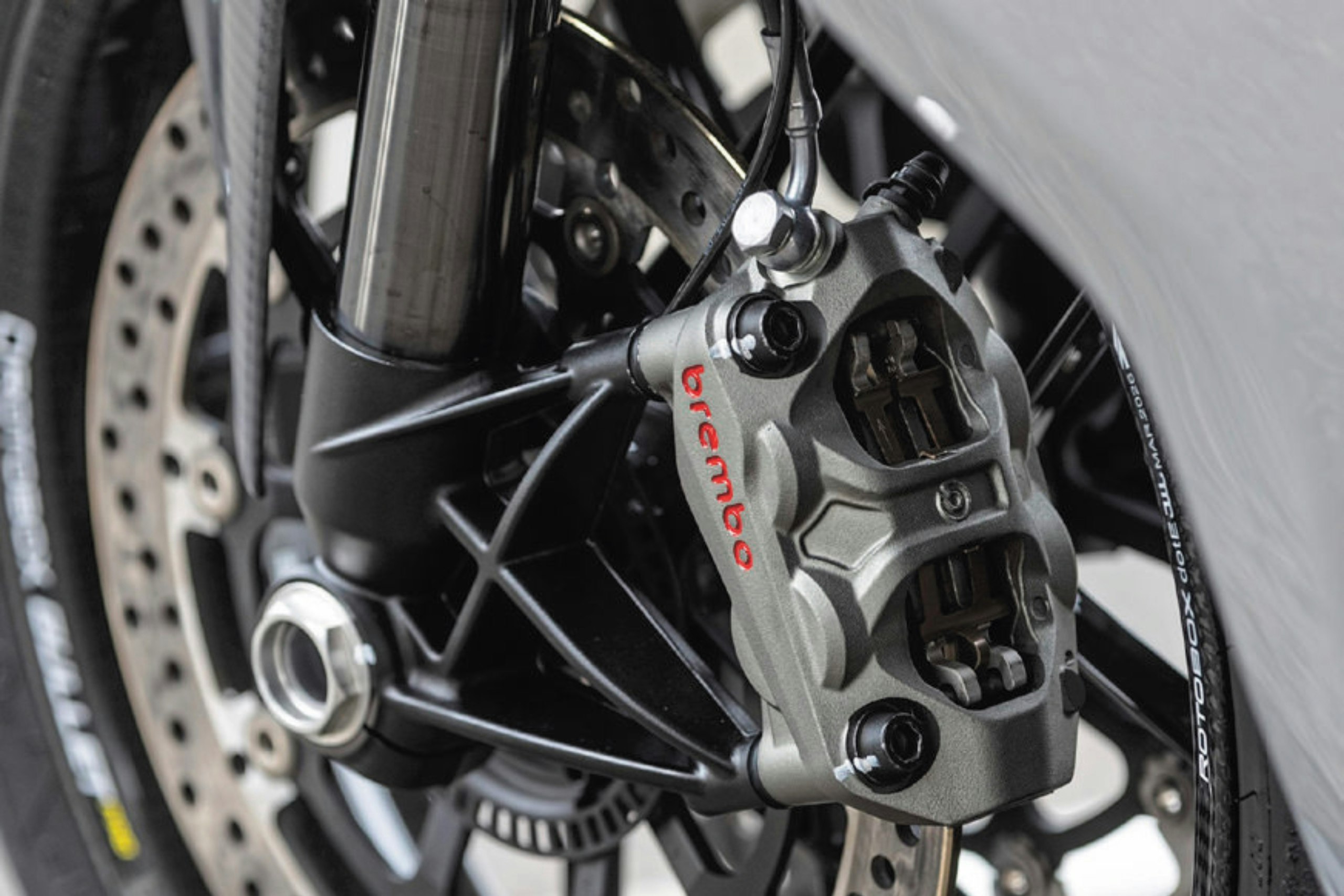
I leave the pit lane and, thanks to the quickshifter and autoblipper, shift from first to third without thought or touching the clutch. Every action is slick and effortless. The ride-by-wire throttle is fingertip light. As I wind it open, I’m unsure how much of what I’m getting is controlled by electronics, but even on the warm-up lap, the bike nonchalantly reaches 150mph along the back straight. The 320mm discs and Brembo calipers are immense and consistent. Cornering ABS means I can also brake deep towards the apex. The grip, feedback and freedom for me to move around are on another level. It hardly matters if I’m in third, fourth or fifth exiting some corners – the V4’s torque and electronics simply drive the bike forward.
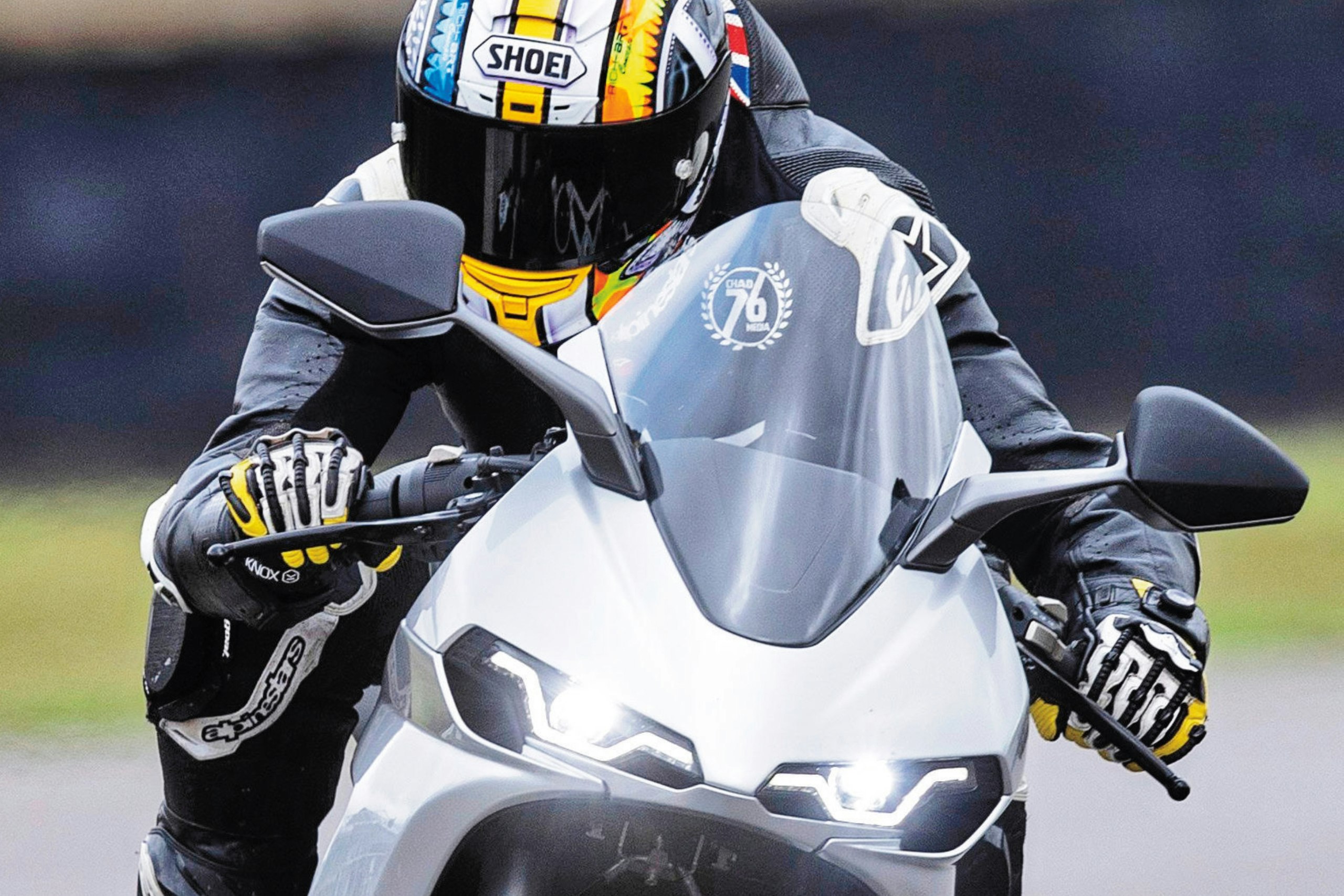
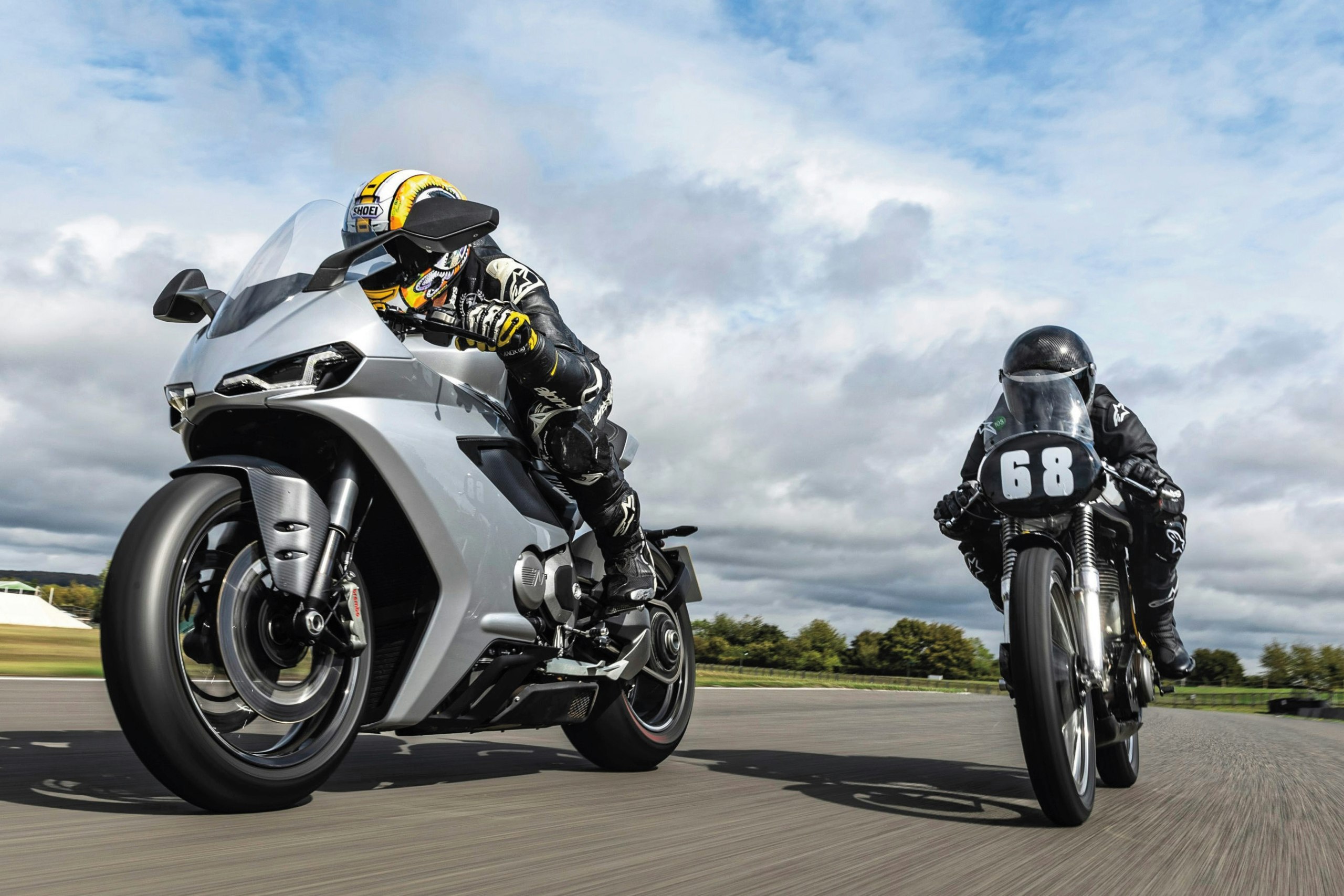
By lap two the Manx R superbike is flying, leaving black lines on the exits. I’m sharing the circuit with 20 or so classic racers, several of them on Manx singles, which I approach at double their speed, sometimes more. These boys are riding as hard as they can, while I’m barely breaking sweat. That’s 70 years of progress, right there.
Which is more fun?
Both Manx are wonderful to ride, in their own way. The V4 has so much flexibility it pulls hard in any gear. Everything happens so much faster and requires enormous concentration, yet it’s also exponentially more forgiving, supportive and reassuring in a way 1950s riders simply couldn’t comprehend.
The original Manx requires far more carefully choreographed rider actions, and punishes you physically with its relentless vibration. But when everything comes together, the sense of achievement is greater than lapping quickly on the V4. What racers of the 1950s were able to achieve on horrible tyres in the face of sketchy track safety simply blows me away.
Keeping the past alive
Racing at the Goodwood Revival is an unbelievable privilege. Where else can you be whisked back to the 1940s, ’50s and ’60s and feel so immersed in the racing of that era? It’s a pinch-me moment every time I walk through the gates.
It’s not just about the bikes. The cars and the period dress are always superb, so too the attention to detail that makes the event feel so authentic.
The main race, the Barry Sheene Memorial, is a highlight of my year. This year I rode a 1953 Matchless, immaculately prepared by Stuart Tong, against the likes of John McGuinness, Troy Bayliss and Tom Sykes, to name a few.
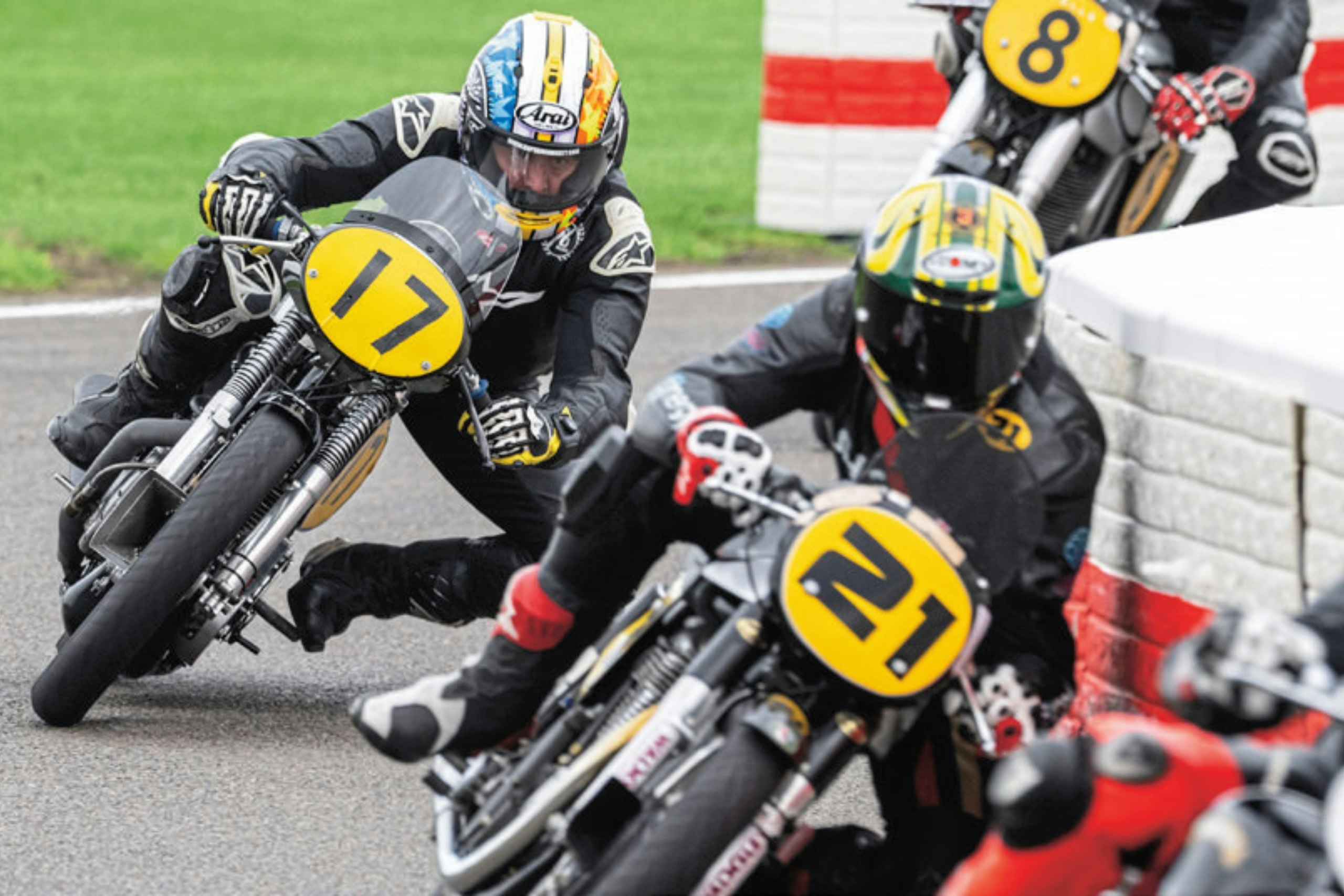
I finished sixth in race one, after banging elbows and swapping positions every lap with Bayliss and Sykes. In race two I grabbed third on the final lap. To see Stuart so ecstatic was a true highlight – not just of Goodwood but of all the racing I’ve managed. It doesn’t get any better than stepping on to the podium alongside McGuinness with a laurel around your neck and a cigar in your mouth.
The only downside is that shortly afterwards you have to walk back out of the gates and return to everyday life.