Group test EXTRA
QJMotor’s SRK921 is in the vanguard of new Chinese models promising fantastic features at great prices. But does it stack up against the existing best-of-the best – Triumph’s Street Triple RX?
By Simon Hargreaves Photography Chippy Wood
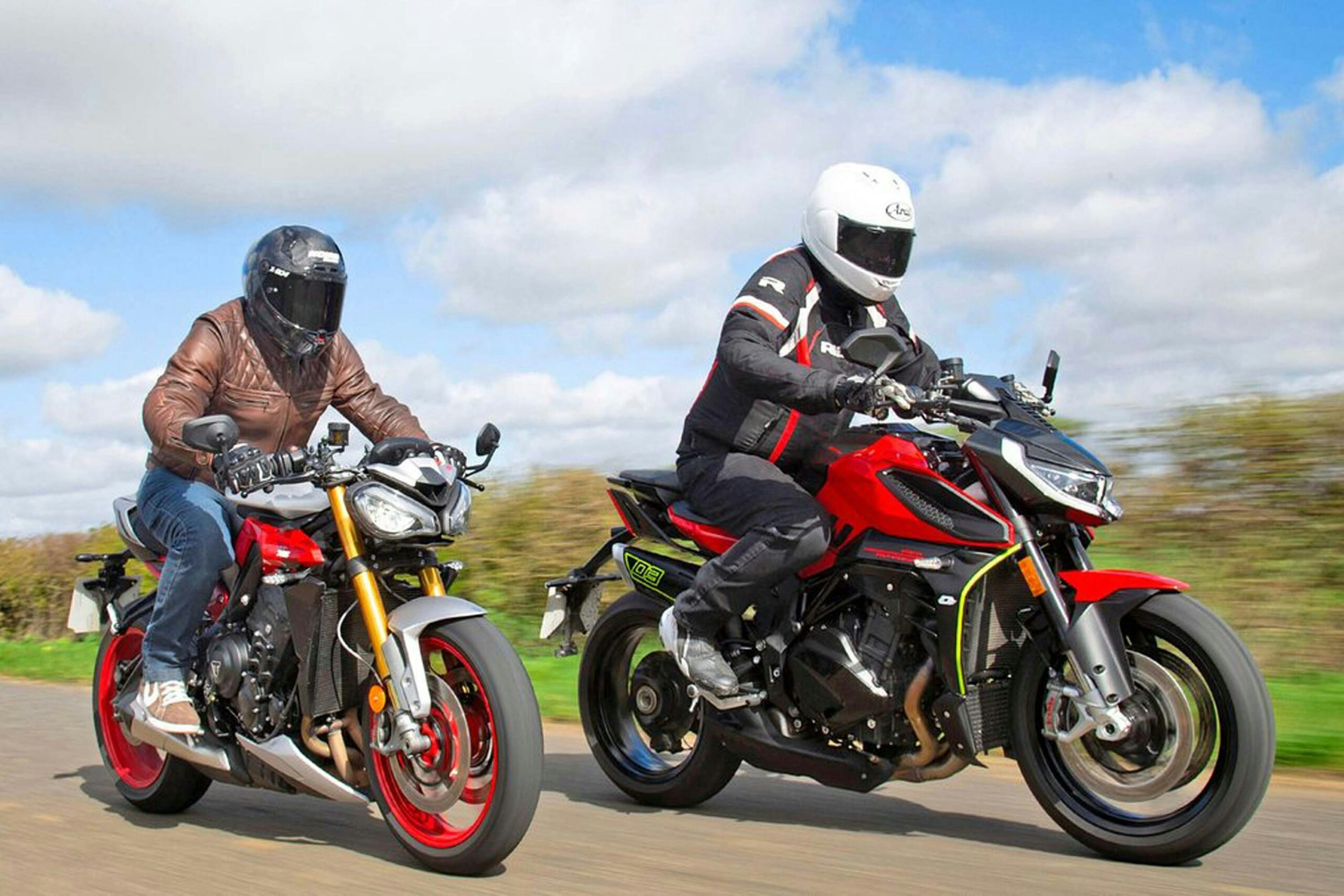
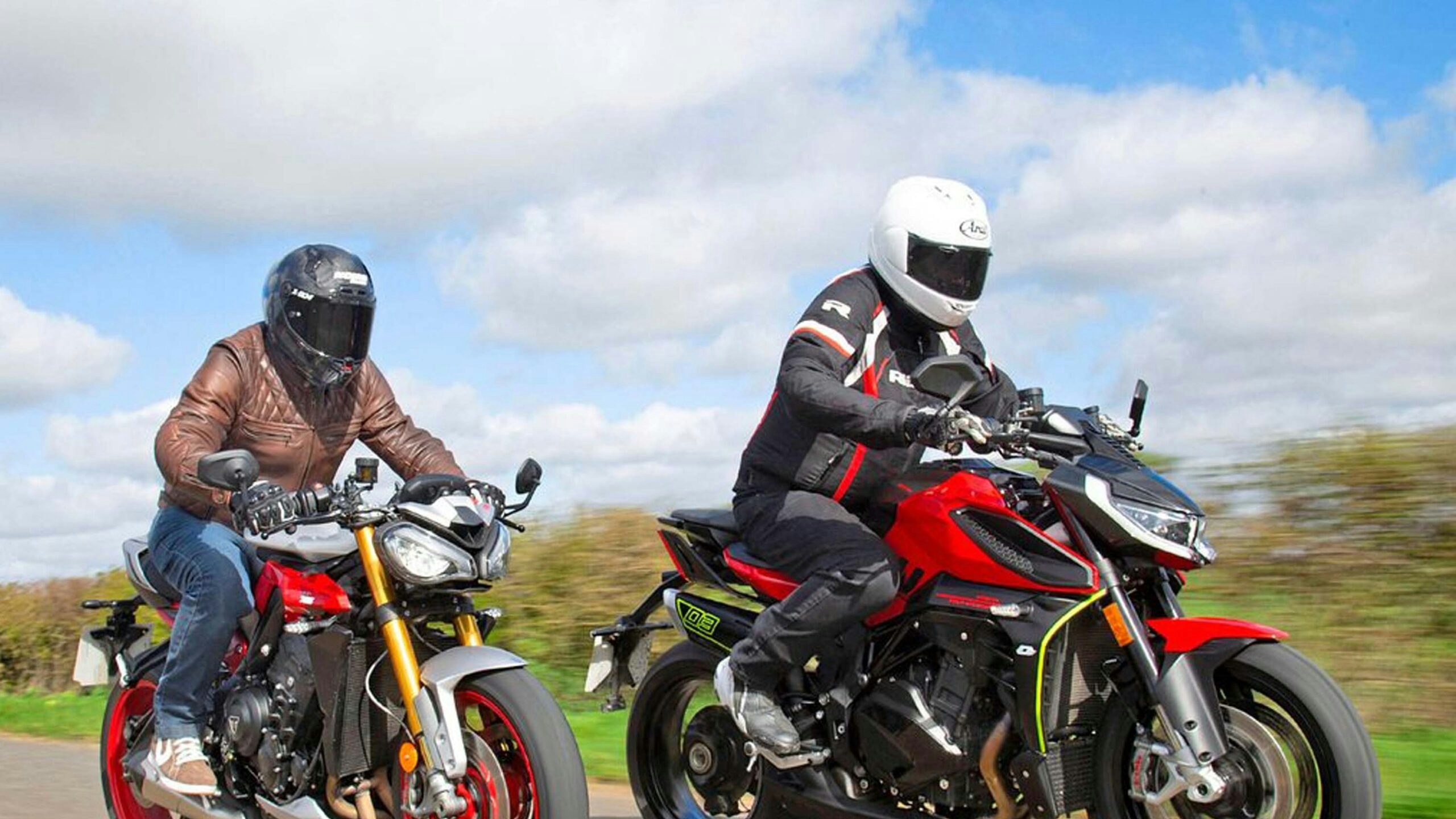
The SRK921 is a new big-bore naked inline four built by QJMotor. It makes a claimed 127bhp, costs £8999 on the road, and lands bang in the middle of a competitive class surrounded by numerous rivals, including benchmark class leaders like Triumph’s Street Triple 765 RX – which we’ve co-opted into providing a baseline against the SRK. So it’s a high bar. And as the first-ever Chinese sporty naked to land in Bike’s sweaty palms, the 921 poses many questions – chief among which is: ‘What’s it go like?’
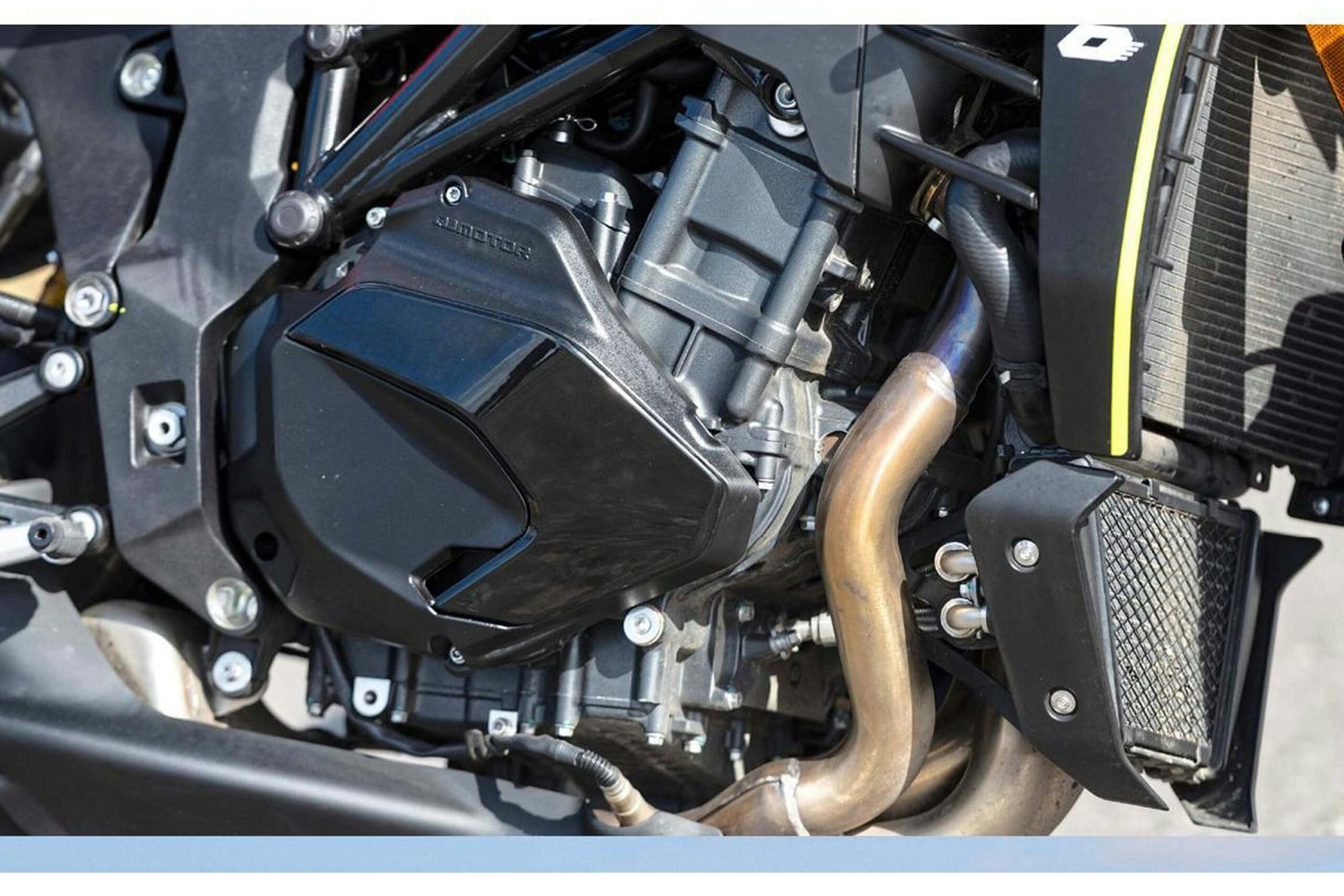
The SRK921 is heavily based on MV Agusta’s largely forgotten budget Brutale 920 from 2011, for which QJMotor acquired the technology licence in a short-lived deal with MV in 2020. Bike tested the Brutale 920 in 2011 and it wasn’t particularly memorable – a slightly anonymous, top-endy naked making good horsepower but swapping the haughty, hard-assed recalcitrance of the posh Brutale 990R with softer, lower-quality suspension and conspicuously absent MV component quality.
But I recognise a distant memory as the SRK921 fires up into a fast 1500rpm idle. It’s not the offbeat gruftiness of the MV, but it sounds bass-beefy when you crack it at low rpm. I briefly wonder if the QJ has MV’s radial valves; I suspect, given expensive manufacturing tolerances, it hasn’t (I asked, but unlike established European and Japanese bike brands, there’s no simple way to find out). But the SRK shares the same capacity, bore and stroke, cylinder block and crankcase castings as the Brutale, even down
to replicating MV badge castings, minus the actual letters. And the inline four’s width between the knees; its steel trellis frame linking headstock to a central cast section; the wide, low, aggressive stance that has the faintest feeling you’re riding a bull; and the proximity of the rasping motor’s airbox to your ears are all somewhere I’ve been before.
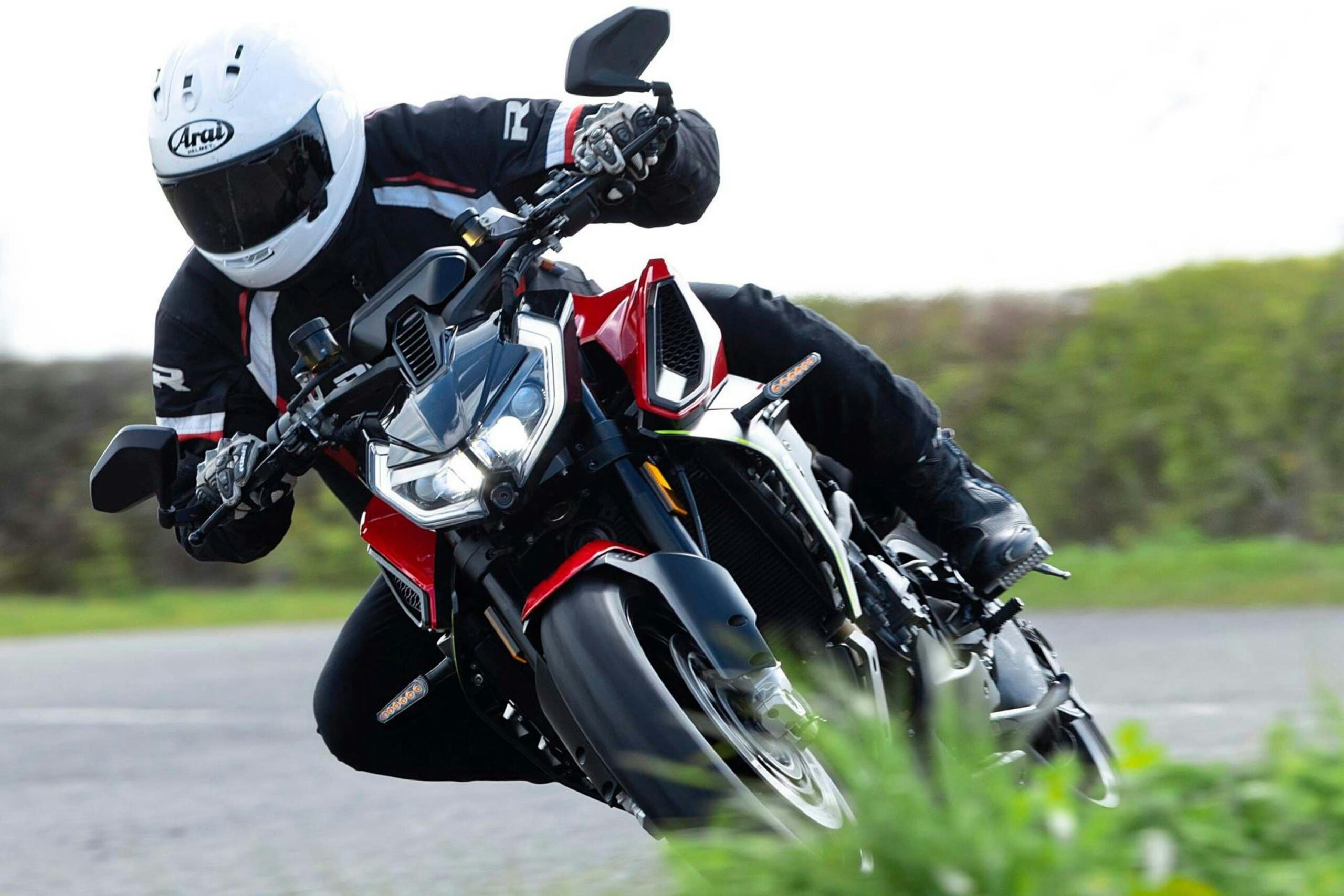
The SRK’s riding position is big, bold and business-like, plonking its rider squarely on a slightly pitched, wide seat with yellow stitching highlights, locked arms reaching forward to low, wide, flat bars – it’s neither a handlebar nor clip-ons, but a single casting incorporating the top yoke, bar riser, bars and ignition barrel (recessed under the clocks and in front of the yoke nut) all in one. It looks cost effective.
The things bolted to it are nice – adjustable Marzocchi steering damper, Brembo radial brake and clutch master cylinders with sculpted levers, chunky bar end mirrors and a 5in TFT dash. Switchgear is conventional with solid up, down, enter and set buttons, a cruise control tab that feels as if it may snap in a breeze, and a dedicated traction control button – the Sport mode for this, but you have to stop to select it. Odd.
‘It’s heavily based on MV Agusta’s largely forgotten budget Brutale 920’
The things bolted to it are nice – adjustable Marzocchi steering damper, Brembo radial brake and clutch master cylinders with sculpted levers, chunky bar end mirrors and a 5in TFT dash. Switchgear is conventional with solid up, down, enter and set buttons, a cruise control tab that feels as if it may snap in a breeze, and a dedicated traction control button - SRK has a Bosch six-axis IMU, which presumably allows for lean-dependent traction control and cornering ABS. Cruise control is also present (but rolling the throttle grip forward doesn’t turn it off; you need to touch the brakes or clutch), and a tyre pressure monitor shows temperatures too (in 5pt font).
Promised heated seats and grips are absent – this is a preproduction bike – but a 1080p dashcam sits under the headlight, and the dash will Bluetooth into a full-map GPS via the appropriate phone app. Three preset-only rider modes are Sport, Normal and Rain, but you can’t flip between them while riding; it needs a menu dive at standstill.
Clicking smoothly into first gear without so much as clink, the SRK pulls away feeling active and punchy. The engine pops through gears with an excellent quickshifter, short-shifting across a bulge between 4000 and 6500rpm – which is right where you want it for punting about. Cruising at 80mph is a buzz-free 5500rpm, then the motor comes on cam at 7000rpm and runs away with a hard-edged revving, making horsepower in a classic, thrashy, arm-stretching inline four pile-on. On BSD Performance’s dyno, the SRK makes a true 122bhp at 11,200rpm (somewhat higher than the claimed 10,000rpm), but runs rich – over-fuelling explains the surging on and off on a steady throttle, especially noticeable trying to hold a steady cruising speed. It even hunts when cruise control is engaged.
Probably also explains the SRK’s poor economy; at a measured 34.4mpg, the 15.5-litre fuel tank has the reserve light on and gauge flashing at a mere 86 miles, and a 96-mile refuel takes 12.7 litres to top up – so there’s another 15 miles left to empty. But that’s thirsty. Andy at BSD reckons he’s seen Chinese parallel twins running this rich, and has made substantial horsepower gains and improved throttle response just by remapping.
Compared to the Street Triple, which gives away one cylinder, 156cc and 3bhp (we measured 119bhp on the dyno), the SRK feels as outright potent; the Triumph just has to rev harder. So where the SRK is making 65bhp at 6000rpm, the Street Triple doesn’t hit 65bhp until 7000rpm. But the Triumph has a thoroughly refined, linear power delivery, with no bumps or dips – any hunting or surging was tuned out long ago. It feels finished; the 921 is a good engine, but fuelling is a work in progress.
It’s the same story with the QJ’s chassis and handling. Specs are great – big, fully adjustable 50mm Marzocchi forks and Marzocchi shock, Brembo radial calipers, Pirelli Diablo Rosso 4 rubber. Is it worth noting the tyres have ‘Made in China’ stamped on the sidewalls? And with Brembo and Marzocchi having Chinese manufacturing plants, therefore possibly also being made there? On first use, no performance difference is detectable – braking is strong, grip is good and, once both ends have compression damping wound off to get suppleness in the movement and overcome fork stiction (the ignition key doubles perfectly as a damping adjuster tool), the ride quality and dynamic control balance are rather lovely (forget about getting a C-spanner on the rear shock – it looks like a shock-out job). And although the steel tube frame bolted to twin cast rear plates looks very similar to the Brutale frame, it’s not a direct copy; the frame sections, subframe and single-sided swingarm are substantially different.
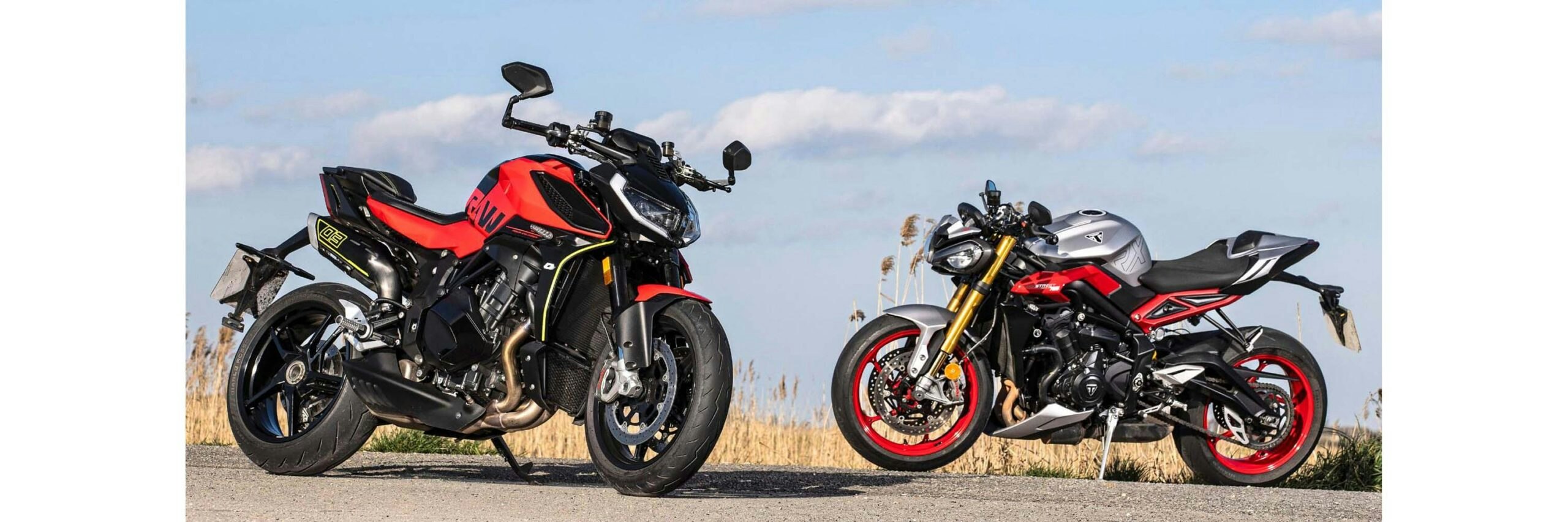
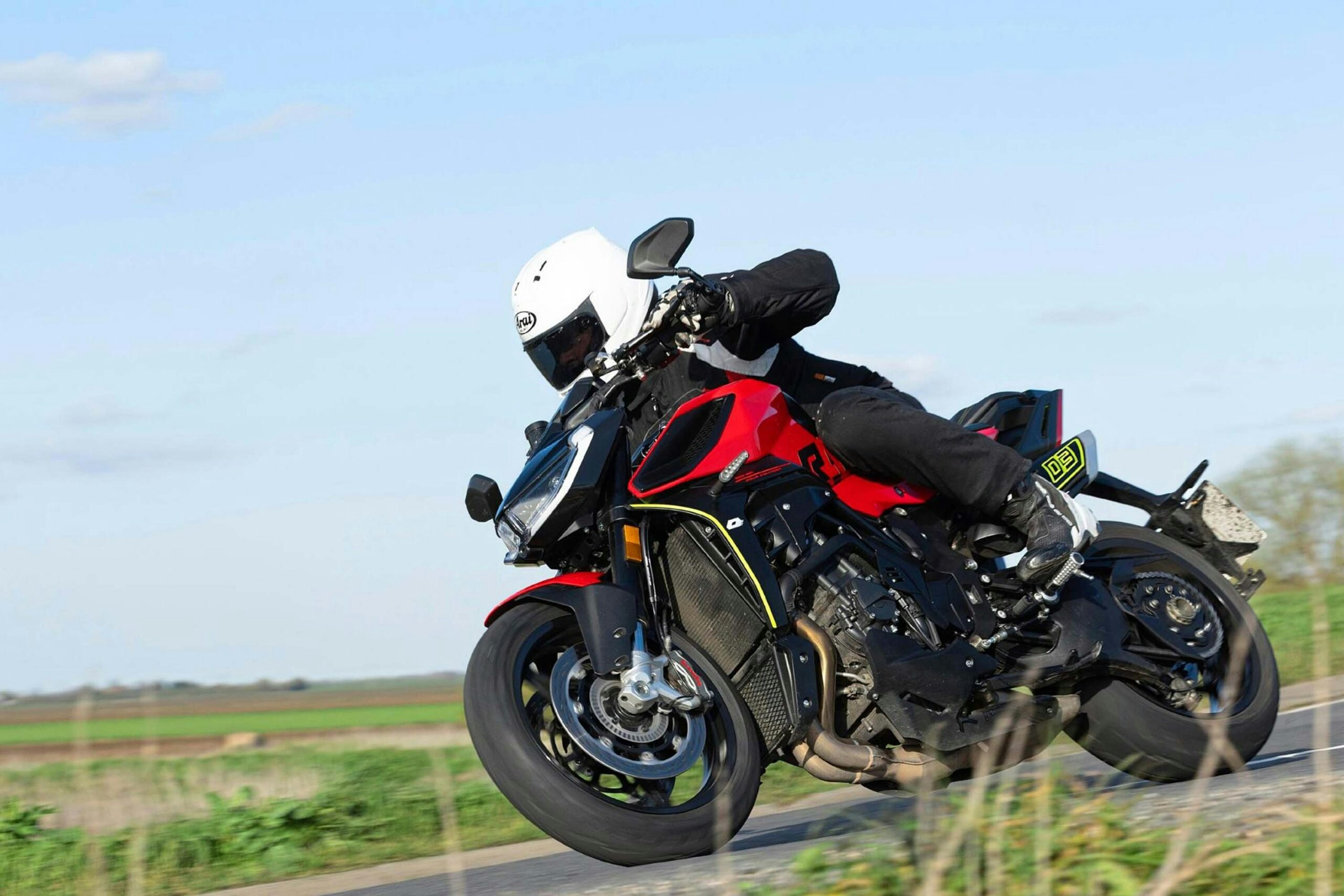
Steering isn’t as direct or tarmac-hugging as the Triumph – both running a sporty-ish 51:49 front:rear weight balance, the 921 turns a measured 227kg wet against the Street Triple’s fully fuelled 188kg; the SRK has nearly 40kg more ballast to pivot around the headstock, and you can feel it as you drag, rather than caress, the SRK on line. Its steering damper contributes to a rate of turn more suited to a sports-tourer – even on minimum, pull the 921 onto its sidestand and lift the front wheel off the ground, and it’s like it’s turning in treacle. But again, it shows a 15-year gulf in development – copy a 2011 bike, get 2011 weights (not surprisingly, the MV Brutale 920 weighed a comparative 225kg fully fuelled). Compared to the svelte, diminutive Street Triple, the SRK is a bigger lump to maul around.
From a mid-distance, the 921’s finishing is pretty good – but get too close and cut corners show up. Decals don’t look like they’d survive a rainstorm let alone a jet wash, why does it say
‘RAW’ in big letters on the tank, the exhaust-mounted retractable pillion pegs are a good idea but execution is clumsy, the milled alloy pegs are seriously awful, and a preponderance of plastic engine covers makes you wonder what they’re hiding – MV logos, perhaps?
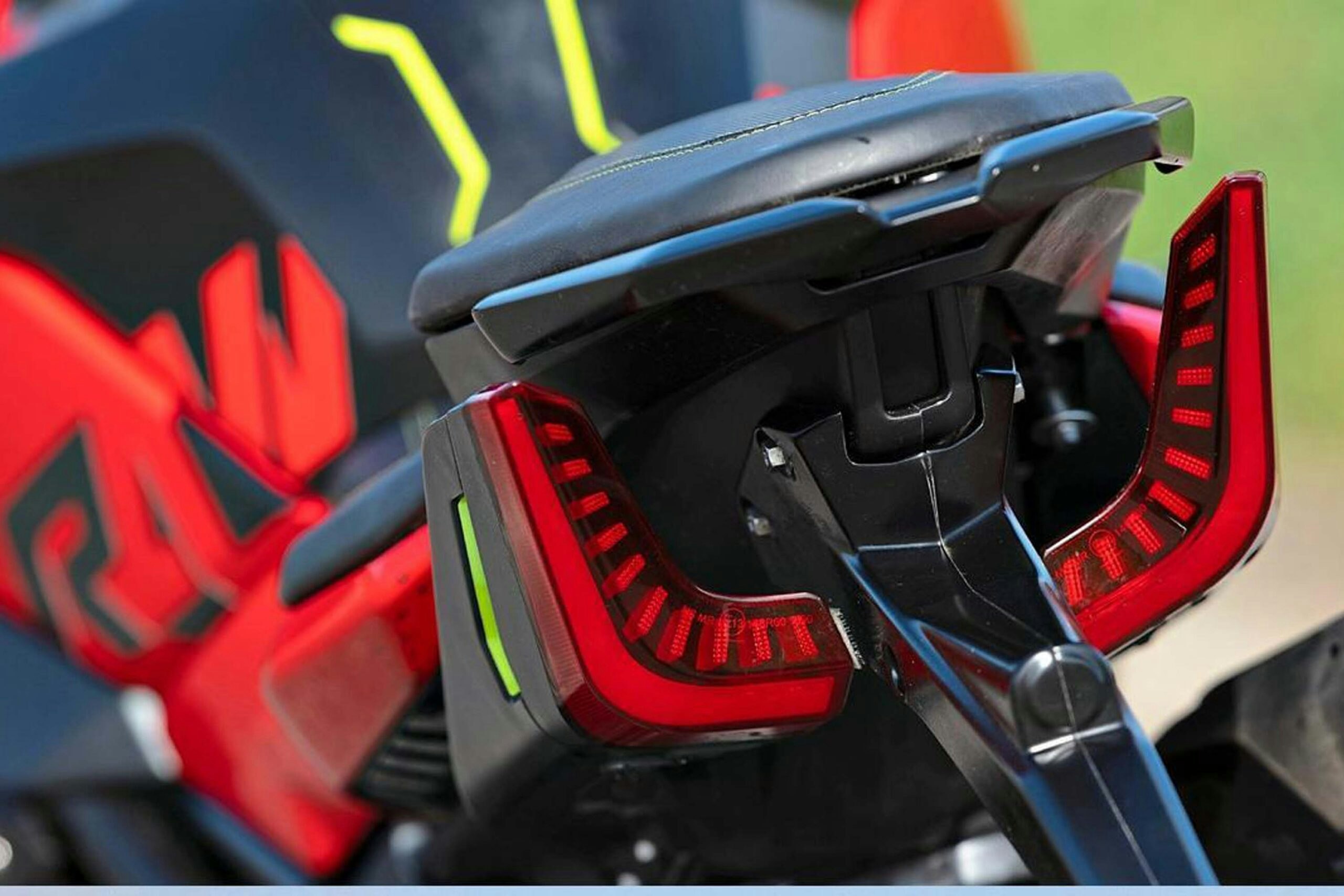
When it comes to styling, the SRK makes the Street Triple look conservative. The biggest break from convention is the 921’s rear light; a large U-shaped rack of floatingdesign LEDs cup the seat unit, while twin high-level cans split the rear end and a pair of large scoops embrace the front end. It’s a very distinctive look – the whole styling job is adventurous, looking somehow futuristic and yet not totally tacky.
‘Good in parts, but a few rough edges conform to a Chinese bike stereotype’
On the dyno
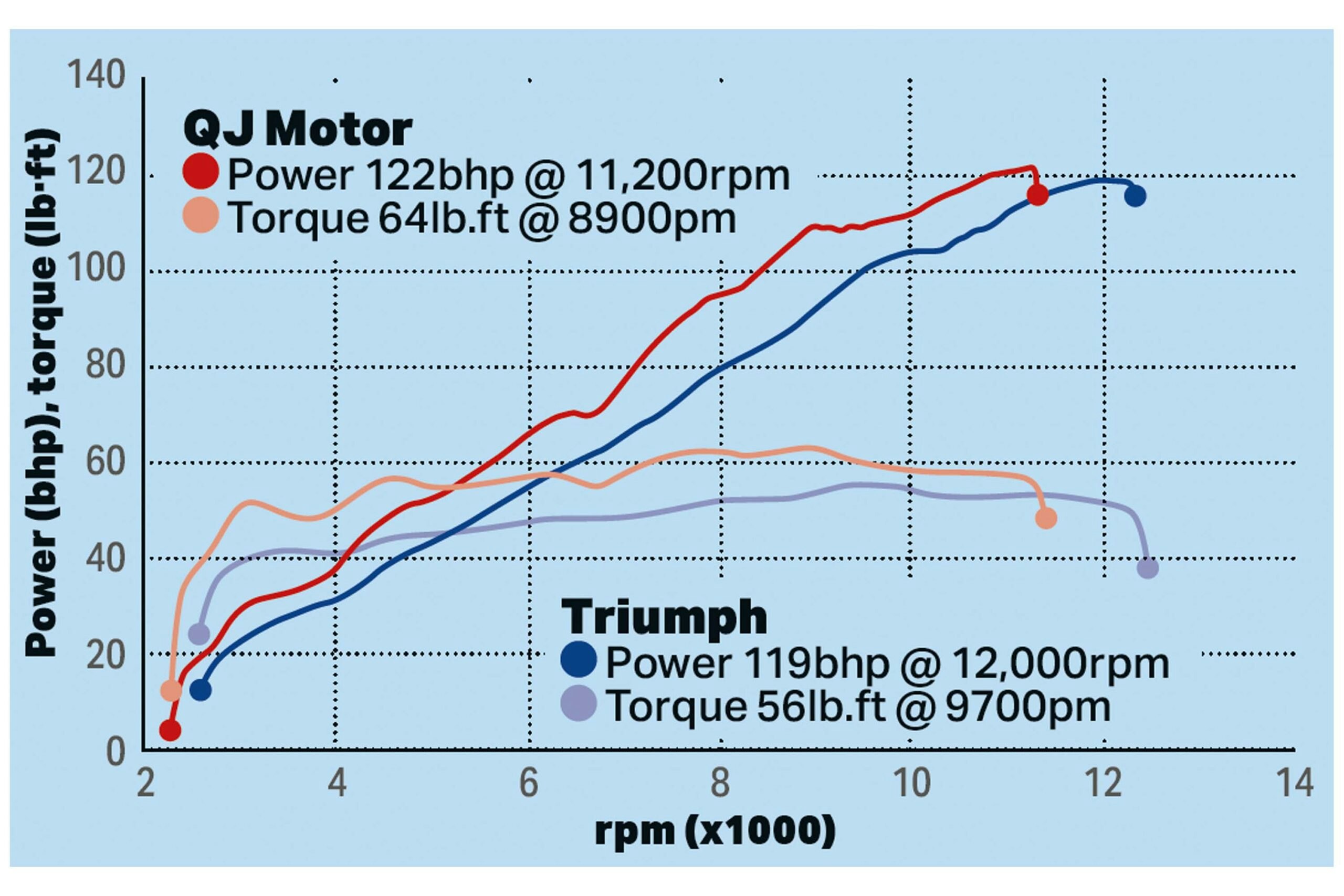
» On paper, the QJMotor makes 127bhp and the Triumph 128bhp. But we don’t ride bits of paper, so we strapped both to a dyno and measured their performance at the rear tyre. The QJ matched up to its claim pretty closely, with 122bhp at the wheel – a crank-to-tyre loss of less than four per cent. The Triumph was only a smidge behind at 119bhp, trailing 1000rpm behind the QJ by virtue of its smaller capacity. While the QJ makes more power earlier in the revs, it also delivers that drive with much rougher, lumpier curves, and prefers to be over 7000rpm. The Triumph may look revvier, but it feels a more flexible, predictable engine on the road thanks to its smoother, more linear power and torque curves.
QJMOTO R SRK921
Price £8999
Engine 921cc DOHC 16v inline four
Power 122bhp @ 11,200rpm (measured)
Torque 64lb·ft @ 8900pm (measured)
Wheelbase 1425mm
Kerb weight 227kg (measured)
Seat height 835mm
Tank size 15.5 litres
Economy 34.4mg (measured)
Colours white/black, grey/black, red/black
Availability now
Bike verdict An admirable effort and good in parts, but a few rough edges conform to a Chinese bike stereotype. But, ironically, perhaps the SRK’s biggest problem is its price compared to the known quantity of Honda’s £9099 150bhp CB1000 Hornet.
Bike rating 7/10